
Saturday, October 07, 2023


The Phenomenon of Gaddar
https://acrobat.adobe.com/id/urn:aaid:sc:AP:6cda8f29-7b6d-49f2-a938-637b824e6e92

https://www.academia.edu/8724728/Popular_Culture_and_Ideology_The_Phenomenon_of_Gaddar


Tuesday, December 29, 2020


Wednesday, September 21, 2016
Bojja Tarakam: The Dalit Leader
Prof.
P. Kesava Kumar

Bojja Tarakam
(1939-2016), a Dalit leader of high eminence passed away on 17th
September 2016. He is a well known Dalit leader with multiple facets to his
personality. He left his mark on most of the democratic struggles of Telugu society in
post independent India. He is a peoples leader, civil rights activist,
advocate, organizer, writer, poet and ideologue of democratic struggles. His
activism has not frozen into either of the dominant streams of his times either
Marxism inspired revolutionary struggles or Dalit movement. He traversed both
with unparallel ease and sense of purpose. He has been critical of Marxism for
its caste blindness. He did not undermine either. Instead he brought credence
to both.
He was born in a village in Konaseema of
coastal Andhra in an Ambedkarite family in 1939. His father, Bojja Appala Swamy
was a first generation dalit leader in independent India and was responsible
for establishing Ambedkar led Scheduled Castes Federation in 1942 and had been elected
as a Member of legislative Assembly in 1950s.

Educate,
Organise and Agitate
Tarakam was an active
student leader and completed his graduation in Law. He started practicing law
from late 1960s to late 1970s in Nizamabad and engaged in wide range of
struggles by organizing Rythu Coolie Sangham and Ambedkar Yuvajana Sangham.
He was arrested during emergency and imprisoned for his public activism on
various issues of people. Later he shifted to Hyderabad and started practicing
in High court and become appointed as public Prosecutor of Administrative Tribunal.
Later, in protest against Karamchedu massacre, he resigned for this post and
continued as senior advocate by taking up the cases of people. He was the
founder vice-president of Andhra Pradesh Civil Liberties Committee (APCLC)
and a member of Revolutionary Writers Association (Virasam). Though he was
active in Marxist leaning organization, he never deviated from the core of
Ambedkarism. After Karamchedu masscre, Telugu society has witnessed the strong
assertion of dalits and formed autonomous dalit organization by ideologically
differentiating itself from Marxist politics. In formation of Dalita
Mahasabha in 1985, along with another prominent dalit leader Kathi Padma
Rao, he was the founder president of that organization. He took up the
Karamchedu case. The Dalit Maha Sabha (1985-1991) had a creative intervention
in Telugu society and consequently changed the political discourse. He then
become a state convener for Chunduru Struggle
Committee(1991).The political mobilization of dalits resulted in formation
of Bahujana Samaj Party in A.P. and he was the founder secretary from
1990-1994. He came out of the BSP as a protest against the party for its
alliance with BJP in Uttara Pradesh. He started reviving Republican Party of
India in A.P and came out after Ramdas Athavale’s identification BJP.
His
life was spent in writing fact finding reports, organizing press meets, public
meetings and fighting for justice in courts. He believed in the philosophy of
questioning the social system and state machinery rather than petitioning to
them. It is clear that Tarakam has established credibility with his commitment to
wide range of issues of people and a threshold for democratic struggles. He reached
to the people through his writings on various issues. In Telugu society, public
life was marked by ideological confrontation between left and dalit politics. Many
intellectuals and writers came out of the fold of left politics with emergence
of dalit politics from late eighties. But Tarakam was an exception to this
trend. He was never deviated from the philosophy and practice of Ambedkarism
and viewed every struggle from Ambedkarism. His struggles and writings are
testimony for this. His criticism against revolutionary left is constructive
and anticipated support for dalit issues. His work Kulam –Vargam(Caste-
Class, 1996) ideologically clarifies his position on both caste and class. Apart
from his literary writings Nadiputtina Gonthuka(The Voice That Gave
Birth to the River,1983), Nalage Godavari(The Godavari is Like Me, 2000)
and Panchatantram(2012), his special tracts Nela-Nagali-Mudeddulu(Land,
Plough and Three Oxen, 2008) , Dalitulu-Rajyam (Dalits and the State,2008),
Constitution and the Coup D’ Etat (2000) provides specific theoretical
approach to key issues. In other words,
we may find distinct approach of Tarakam in understanding society and polity.


Dalit Labourer as Third Bull
Tarakam’s
Nela-Nagali- Mudeddulu is about the relations of feudal system and
exploitation of labour. This explains the master and slave relations. Here the
third bull symbolically represents the Paleru(bonded labourer)/ Jeetagadu
(wage labourer). This is a story set in Indian agrarian society and deals with how
the labourer is reduced to the beast. In the feudal set up, labourer does not
have any rights or freedom other than working for the landlord. The landlord
has control over the land. Power and status has invariable relationship with
land. The landlord, social system and state machinery collectively operate to
maintain the status quo in social relations. It depicts a condition of economic
drudgery and mental slavery which is rooted in world view of feudal Brahminical
system. When the labourer realizes that he is a human and that awareness leads
to struggle. It is impossibility as imagination is etched in feudal world view.
The political economy of agrarian
society depicted in an impressive manner in a form of a story in this book.
This is a new genre in literature informed by specifities of political economy.

State, Constitution and Dalit Movement
Dalitulu –Rajyam
depicts the evolution of Indian state and marginalization of dalits. This book
is continued in the above said genre and explains how dalits were kept out of politics
and purview of state. In this he explains the origin and nature of state and
its sustenance in protecting the interests of ruling class/caste by maintain
status quo of dalits. The state has structured such a way that it controls the
anger and aspirations of dalits against the ruling class/caste and state.
Though the welfare state in modern times came up with egalitarian principles to
uphold the dignity of the oppressed, the caste structure and its value system does
not allows the state to be a welfare state based on these principles. He
stretched this logic in Constitution and the Coup D’ Etat , which was
written in the context of Hindutva’s design to review the Indian constitution.
Though the state that based on constitution drafted by Ambedkar was escaping
its role of equalizer, modernizer and liberator of the masses of the country,
but it was checked by the struggles of the country. The conservative hindutva ruling classes felt
the struggles of the oppressed is a threat to the hegemony. To control the
masses and to continue their hegemony, thought of changing the constitution to
suits their interests. By foreseeing this evil intention of hindutva forces,
Tarakam argued that ‘we have to protect this constitution because it promises
justice, liberty, equality and fraternity. We have to save the constitution
because it guarantees the celebrated fundamental freedoms. We have to guard the
constitution because it assures a welfare state.’ Tarakam maintains that if
oppressed people won’t fight against injustice, state will be undemocratic and
monopolized by ruling class/caste.


Literature
as A Medium
Tarakam is a voracious
reader and evaluated literature from a dalit perspective. He took literature as
an organized activity in making people conscious. In seventies, he identified
with Revolutionary Writers Association (Virasam) and in eighties he has
organized all India dalit writers coference with participation of around
thousand writers. In nineties, under his editorship, Nalupu has
initiated the alternative cultural discourse. Tarakam’s Nadi Puuttina Gonthuka
is a poetry written in the context of emergency. We can see a tone of angry
young man raised voice against the authoritarian state. Through his poetry he
questioned the hypocrisy of Gandhian politics, Oh! Mahatma, have you ever lived
with dalits and had a real feel of suffering of dalits? Naalage Godari is later
collection of poetry. To portray the larger and complex social reality, he
chooses the literary form novel. Tarakam’s novel Panchatantram
illustrates the problem of dalits in the background of caste and class
relations in Coastal Andhra village. Viswanath is a landlord of a village and
Suranna works as his Paleru(labourer). The sexual relation between Suranna
and Lakshmi daughter of Viswanath leads to killing of Suranna. Suranna’s father
too was killed for making an attempt to complain against landlord. The story
ends up with the struggles of resistance of young Suranna who was born
illicitly born to Lakshmi and Suranna. This novel depicts the cruel face of the
caste in India in ordinary situation. Land, power and status are with the
landlord. Rules of social system, and state machinery is subordinated the upper
caste landlord. Dalits have no freedom in situations of everyday life. Any
resistance to the authority of landlord was crushed ruthlessly and the
institutions of state were used in their favour. The authority was later
carried by Dattu, grandson of Viswanath. This casteist young man killed those
who contested him (Ganganna , a dalit boy
for contesting against him in school elections, and Gowri , dalit girl
raped and killed by him). In both cases, the son of landlord escaped from the
cases and on other attempts to implicate Suranna, rebellious young dalit man
(illegitimate son of Gowri) who is the force behind Dalit victims. Suranna’s
struggle has no value with the
manipulation of police, courts and doctors by the landlord but Suranna stands
as a moral force in this novel. The novel ends with killing of the landlord
Viswanath in the dark by Sathemma another victim of Viswanath.. The novel not
only depicts the discrimination, helplessness of dalits but also the resistance
of dalits against the landlord in every occasion. In nutshell, the novel
narrates the feudal power and how the structures of village and of state are
succumbed to the power of caste and class. Tarakam believes that this situation
has to be changed for a democratic society. The change has possible only
through struggles of the oppressed in various forms.


Caste
or Class
Kulam-
Vargam is a text of Tarakam that engages with questions of
significance of caste and class in
transforming Indian Society. This political text has been written in a form of
story to reach the ordinary readers. This has its historical significance where
the ideological differences were widened within democratic struggles. This makes
clear the differences between movements of radical left and dalits in
understanding Indian social reality. It sets the programme for the both the
camps in reconstruction of Indian society. In India, caste is the foundation
on which society is organized. Caste alone determines the economic, social,
political and cultural status of the people. He posed a question how can
caste and class be abolished simultaneously? Both caste and class struggles are
constituents of the revolution. The abolition of caste is as revolutionary
as classlessness. Caste struggle is a mental-material revolution, while the
focus of a class struggle tends to be limited to materialistic considerations.
In both Srikakulam and Telangana armed struggles, the communist party did not
addressed caste issue. The upper caste leadership of communist party failed to
take up the issue of caste against the interests of their own castes. He
believes that so long as the leadership remains in the hands of upper castes,
no attempt will be made to bring about fundamental changes. Tarakam believes
that annihilation of caste and class is an immediate political necessity. It is
the responsibility of both Dalit and
Marxist struggles, otherwise both will not sustain. In the process of
struggle, dialogue between these groups inevitable. It needs conviction and
energy to overcome immediate hurdles. Tarakam had both conviction and energy in
a dream of realizing social revolution.

Multi faceted Life
He worked for the
struggles of the people in his entire life. He has simultaneously involved in
the revolutionary struggles and dalit struggles. He is consistent in his firm
political conviction of ideology of liberation of oppressed. The organizational
structures were never constraints for him. He valued every effort and struggle
of the people, whatever may be the form or political affiliation. He was in
forefront of all the democratic struggles of Telugu society. His politics has
larger canvas. He was directly and indirectly part of all the people struggles
for a period of five decades. This includes both class and caste
struggles- land struggles, Beedi workers
struggles, political prisoners, fake encounters, struggles against Special economic
zones, struggles against SC/ST atrocities, specific struggles against
Padirikuppam, Karamchedu, Chunduru, Nirukonda, Timmasamudram, Laximpeta
massacres. He expressed his political position through his speeches and write
ups. It bears a distinctive dalit point of view. Tarakam was not confined to
the political struggles and extended himself to literary and cultural domains.
He believed that politics has to be based on strong social and cultural
foundations. He wrote poetry, novels, poetic prose and essays. For him,
literary writing is a political necessity. To express himself and to reach people,
he invented a new political genre that fused social/political theory and
literature. The liberation of the oppressed is the underlying theme of all his
writings. His politics and writings set against the ruling caste-ruling class
and state. Tarakam is an organic intellectual in Gramscian sense. He was
organized the oppressed social groups (dalits) keeping in forefront and felt
the need for having alliances with other groups against the dominant ruling
caste/class hegemony and state.
In establishing the
hegemony of the ordinary people, Tarakam believed in Ideology of Ambedkar as a
political ideology to bring about just social order. All his speeches and
writings reflects the essence of Ambedkar thought. He made us to understand
Ambedkar in simple terms for ordinary public. He has translated some of the
volumes of Ambedkar writings and formed Ambedkar memorial trust. Rather
reproducing the Ambedkar, he has creatively interpreted Ambedkar to suits the
contemporary situation. He negotiated with Marxists from Ambedkarist position. He
made his position clear that without understanding the caste, it is difficult
to have a successful revolution. Both Marxist movements and Dalit movements
have to work simultaneously for annihilation of caste and class. Tarakam’s
contribution is that he opens up the category of dalit as a broad political
category that have the spirit of rebellion against dominance. We can see a
conscious effort on his part from the time of Dalit Maha Sabha till his last
breath.

Lost
Horizons
The
life of Tarakam is devoted to democratic struggles having connections to
diverse ideological positions and organizations. He participated in all the
democratic struggles of our society. It is difficult to fill the gap of Tarakam
especially to regain such rich cultural past of democratic struggles and the
way he mediated contesting ideological positions in the liberation of the
oppressed. The strength of Tarakam lies in moving beyond the dichotomy of
Marxism and Ambedkarism. He has created larger ideological frame work for dalit
liberation through his relentless engagement in public struggles which has
economic as well as cultural dimension. Dalit politics in Telugu society have
entered into a new phase in which assertion of exclusive identity becomes means
for self recognition. It is important to celebrate the historically and
culturally marginalized identity to achieve self affirmation. Unfortunately
dalit politics during this phase has avoided economic and cultural issues. It
has not only narrowed the scope of politics but also fails to carry out multi dimensional
struggles. The dalit mobilization has become self congratulatory without focusing
on suffering. Due to lack of strong political foundations, this dalit identity
has not only become authoritarian but also looses on liberatory content of
dalit struggles of previous decades. The direction of dalit movement has
changed. There is no voice of protest
and the new dalit leadership became subordinate to power of ruling castes. This
kind of situation undermines dalit politics. It becomes a suicidal situation
for dalit politics. One thing is clear that the generation of Tarakam had never
bowed down to these ruling communities/classes and had a relentless fight
against the undemocratic system. He never compromised with system and lived
with honesty. When the political struggles of dalits were at low phase, he
channelized his energies to literature. He never took retirement from public
life and waged consistent struggle against oppressive Brahminical society and
undemocratic state. Tarakam has opened up the space for dalit politics by
widening dalit identity. His struggle is for dignity, political power and
rights and not for subordination to the centers of power.

Wednesday, July 27, 2016
Students Struggles of Hyderbad Central University: Emergence of Dalit Politics
Prof. P. Kesava Kumar, University
of Delhi, Delhi

The University
is a modern public space. The students struggles of Hyderabad central universitity has changed the very charecter of this public space.Especially the struggles of Dalit students took the lead in alternative democratic politics of the nation from the time of pro mandal agitation to recent Rohit struggle. With the Rohit struggle, the Amedkarite politics of university has not captured the imagination of the nation but also got acceptance from alternative politics to casteist hindutva politics. From 2000 to till time, the campus dalit politics has not only consolidated its base but also got appeal to other non-dalit students, even to the muslim students. With the rise of hindutva politics, dalit student politics were targetted. Dalit stuents were retaliating the dominant casteist forces in all possible ways. As a result Dalit politics of the nation has not only revitalized but also emerged as the only viable alternative against fascist hindutva forces.This note trace out the student politics from late eighties to early 2000.
TheTill the eighties, the entry of Dalits into the University was minimal. From the eighties onwards, there is a visibility of Dalit students in the University. The entry of students from lower caste groups is possible only because of the reservations in educational institutions. Mostly, they are confined to the Social Sciences and the Humanities. There is a serious debate begun in academic circles about the lowering of academic standards in higher education. For the Dalits, it is a new experience in the University. They are usually confronted with the existing academic and cultural environment of the University, which is new for them. On the other side, Upper Caste students feel threatened with the very entry of Dalit students. There is a strong feeling prevailing among these students that Dalit students are grabbing their opportunities in the name of reservations without having any ‘merit’ or taking any effort towards it. As a result, one can see a serious confrontation between the students from lower caste groups and upper caste groups in the context of competition for resources and opportunities. This can be seen in the agitations around the implementation of Mandal commission recommendation for ensuring the reservations for OBCs in government jobs. This created almost a polarization of Indian society in the lines of caste. Mandal issue was a turning point in Indian politics. The inherent contradictions on the issue of caste came into public debates. This episode influenced the civil society in general and University campuses in particular. A serious politicization began in the Universities and students became conscious of their castes, rather pretend to be ignorant of caste.
TheTill the eighties, the entry of Dalits into the University was minimal. From the eighties onwards, there is a visibility of Dalit students in the University. The entry of students from lower caste groups is possible only because of the reservations in educational institutions. Mostly, they are confined to the Social Sciences and the Humanities. There is a serious debate begun in academic circles about the lowering of academic standards in higher education. For the Dalits, it is a new experience in the University. They are usually confronted with the existing academic and cultural environment of the University, which is new for them. On the other side, Upper Caste students feel threatened with the very entry of Dalit students. There is a strong feeling prevailing among these students that Dalit students are grabbing their opportunities in the name of reservations without having any ‘merit’ or taking any effort towards it. As a result, one can see a serious confrontation between the students from lower caste groups and upper caste groups in the context of competition for resources and opportunities. This can be seen in the agitations around the implementation of Mandal commission recommendation for ensuring the reservations for OBCs in government jobs. This created almost a polarization of Indian society in the lines of caste. Mandal issue was a turning point in Indian politics. The inherent contradictions on the issue of caste came into public debates. This episode influenced the civil society in general and University campuses in particular. A serious politicization began in the Universities and students became conscious of their castes, rather pretend to be ignorant of caste.
To understand
the Mandal and Post-Mandal politics in a public space like the University, the
developments in the University of Hyderabad and the political assertion of
Dalit students in the University for a decade may provide some insights. This
University produced many Dalit writers and scholars in contemporary times. This
University is known for its immediate response to the political happenings of
India, rather any other University in Nineties. Dalit politics outside the
campus particularly influenced the University.
University of
Hyderabad as a central university came into existence in the late seventies in
Hyderabad, Andhra Pradesh. It was established as per the six-point formula
intended to concede to the demands of Jai Andhra movement. It was assumed that
the University may provide opportunities for higher education to people from
all regions of A.P. since another university in Hyderabad, Osmania University,
predominantly catered to the needs of the Telangana region. At present, the
University has been able to attract students from all over India, though the
majority of them are from A.P. The location of the University assumes
importance, as A.P. has been known for intense political struggles like the
Naxalite movement and contemporary Dalit and women struggles. Students of the
neighbouring Osmania University had gone to villages to participate in
rural-peasant struggles in Telengana in the eighties. That was the atmosphere
surrounding the University at the time of its inception. But the University of Hyderabad has been
immune to all those political influences throughout the eighties.
While conceiving
the idea of that University, the underlying premise was primarily to promote
excellence in the field of Sciences, and it was followed by Social Sciences and
then the Humanities. Semester system was introduced and retained till now to
monitor the performance of the students closely. Teachers have been given total
autonomy in the matters relating to curriculum, teaching and evaluation. The
medium of entrance examination is only English. These things heavily influence
the social composition of the University and the retention of students from
relatively disadvantageous social background. But precisely this has become
essential to the identity the University advertises to enhance its reputation.
Throughout its career, the University had a significant number of students from
the elite and upper middle class back ground. This University fulfilled the
upper caste, middle class dream of studying in an island of excellence where
pursuit of knowledge is to promote one’s career alone. Majority of University
teachers come from elite social backgrounds who have studied in ‘prestigious’
institutions. But they do carry notions of unbridled academic pursuit as short
cut to serve the developmental needs of the society. Everything else appears to
disturb this middle class aesthetic of calm, pleasant campus devoid of ‘dirty’
politics. Everything seemed to be ‘fine’ in those early days.
Till late
eighties, students used to organize around their classroom. His/her department
or batch, marked the student. One is identified by the names of few individuals
visible in public. Disadvantages associated with particular social background
like one’s caste, economic position, rural/urban and cultural (un) skills
associated with them were never openly talked about. They were pushed under
carpet and made beautiful by the cosmetic liberal environment. Dissent was
limited to private murmurs. Collective activity was centred around picnics,
fresher’s and farewell parties. The idea of discomfort over elite ways of life
were partly expressed in terms of particular depts or groups; For instance,
English dept. students had the image of being hip/arrogant. In those days, the
enrolment of Dalit students into P.G. courses was minimal. Most of the Dalit
students used to drop out of their courses as soon as their first semester got
over, as they were not given with the required percentage of marks. Of course,
the drop out rate used to vary from department to department. Students from the
Dalit community didn’t have any other option, except to exit from the
University. It was rare to find Dalit students with 50% of marks in those days.
It was accepted as one’s fate, which cannot be changed by conscious human
effort. The enrolment of Dalit students into research was almost negligible
since the rule of reservation was not followed in case of admission into
research programmes.
Things started
changing by the end of eighties. There had emerged a class of students from the
Dalit communities whose parents had been employed in small government jobs.
This can be mentioned as the product of efforts of Christian missionaries and
welfare policies of the postcolonial government. These students were able to
study in some of the good colleges located in the developed coastal region of
the State. They had entered into the campus by the late eighties. This
phenomenon has become regular and irreversible.
Break through in
the political situation of the campus came up with the announcement of Mandal
commission recommendations providing 27% of reservations in employment for
OBCs. This has resulted in nationwide hysteria among the upper castes who went
protesting against the government move. Upper caste students within the campus
also joined/led the mobilization with the active participation of women.
University of Hyderabad’s upper caste students spearheaded the anti-Mandal
commission forum (A.M.C.F.) at the state level in Andhra Pradesh. They came up with the articulation that these(OBC/Dalit)
students would breed inefficiency in governmental institutions. For instance,
bridges built by them are bound to collapse and if they become doctors, they
will surely end up killing the patients as they are necessarily inefficient. As
a consequence the country will go to dogs. Aren’t
there many poor people within upper castes? Why not economic criteria? Aren’t
we all human beings? These were basically the arguments against
reservations on the basis caste. They do describe OBC/Dalit students as
inefficient and at the same time they staunchly refute the idea of reservation
on the basis of caste. How can you blame
us for something, which our forefathers have done? Any way we are not
practicing untouchability. That was the attitude of upper castes on campus
as well as all over the country.
Anti-Mandal
commission forum (AMCF) from the University has become prominent in many of the
activities conducted against Mandal commission report in Hyderabad. This has
precipitated a strong feeling of hurt, indignity and insult prominently among
the Dalit students and a few OBC students. There was a sense of hurt as Dalit
students were referred in derogatory terms in AMCF articulations. As a response
to AMCF, a few students had pasted poems by progressive writers in defence of
reservations. (Janachaitany Vedika’s poems and Varavara Rao’s Dejavu ) on the walls. Then, the
students from Dalit communities at the centre and a few OBC and sympathetic
progressive students among the upper caste together formed an organization, Progressive Students Forum (PSF). Prior
to this, there was an informal discussion on naming the organization, whether
SC,ST and BC Students Welfare Association or some other name. The Dalit
students began programmes of protest against AMCF. Dalit students took it as a
point to attend the classes when AMCF called for boycott of classes. AMCF
students had regular programmes in the city of Hyderabad like dharnas, shoe polishing, sweeping roads
etc. to prove that they would be “reduced” to doing menial jobs if Mandal
commission recommendations were implemented.
The University authorities supposed to be neutral, provided them with
buses to go to the city comfortably. That was pointed out and made public by
the PSF. There was an encounter between a huge procession of democratic
organizations of the state and few AMCF students who hijacked a bus to go for a
dharna. The AMCF students shouted slogans against the people in procession.
People in procession had come to the bus and gave few blows to AMCF students in
bus. The AMCF in the University alleged that goons hired by the PSF had
resorted to violence. At that time, the Union minister P. Upendra visited the
campus on an official function. Students of AMCF tried to disrupt the meeting
and entered into a fierce verbal confrontation with him. PSF students
intervened and defended the government’s decision. After a few days, the PSF
called for a University bandh. Dalit students sat at the main gates of the
University to block the entry into and exit from the University. Then AMCF
students came and just walked over Dalit students. Dalit students confronted
them forcefully. University declared vacation immediately in order to diffuse
the crisis.
That can be
mentioned as the first instance of direct confrontation between the Dalit
students and others (AMCF) in an otherwise peaceful campus. It had become clear
and open to the campus, who is who. The silence was broken by the upper caste
students and timely responded by the Dalit students. There had emerged a kind
of polarization between the Dalits and others. Despite of this polarization,
there have been few upper caste individuals, who were with the PSF and actively
participated in it. This polarisation had made explicit the deeply ingrained
attitudes of upper castes towards Dalits. It has caused semantic rapture and
radically changed meanings associated with Dalits. There was a tendency to
indicate SC/ STs with PSF in informal conversation. Immediately after the
vacation, whatever happened during Mandal agitation period was thrown into the
realm of the private of the upper castes, it was never again discussed in
public so enthusiastically. But the spectre of PSF continued to haunt them. PSF
formed in the context continued to take up various academic and socio-political
issues. It has given a sense of confidence to Dalits to be comfortable in
campus and to express one’s problems and demand for resolving them. This
atmosphere helped to raise several questions relating to inbuilt biases within
the academic system.
With the active
emergence of the PSF, Students’ Union of the University lost its importance.
Students’ Union is an elected body and supposed to represent all the students.
The students union is was the sole authority on matters relating to students.
The emergence of separate category PSF made students union irrelevant as PSF
thought that they will represent themselves separately. The space of discussion
and debate is also taken up by PSF by its innumerable public meetings. So the
Students Union became hallow and left to perform only functions like organizing
orchestras on occasion of freshers parties, arranging buses to city on the
occasion of UGC NET and civil services examinations etc.
On the other
hand, PSF began to question the casteist biases built into notions of academic
standards and merit. They took up instances of students who were not passed or
those who had got less mark. They have highlighted how Dalit students had been
excluded from classroom interaction and active student-teacher relationship
because of the implicit ease and comfort in their relationship among upper
caste teachers and students. This was made possible for the upper castes with
their English accent, body language and cultural skills. This has resulted in a
severe exclusion and isolation from classroom. As a result, Dalits were considered
as students unfit to be students in this ‘prestigious’ university. This process
of exclusion and finally awarding grades was made an issue by PSF. This was
articulated as one of the important discriminations in academic institutions on
the basis of caste. PSF submitted memorandums to authorities, issued pamphlets
on these cases and talked to various departments.
PSF was born and
had grown in quite a turbulent time in Indian politics. It was bound to
negotiate and cope with the various challenges that have come to the forefront
during and after Mandal commission agitation. One is the growing
communalization of Indian society centred on Babri Masjid demolition. The
second one is liberalization and privatisation of the economy and its
associated evil impact on the education sector. Thirdly, proliferation of
politics based on identities (caste, gender, region, religion, language etc)
The campus witnessed endless debates and discussions over communalisation and
privatisation issues during that period with education in the central focus.
PSF tried to build opinion against the Dunkel proposals through pamphleteering
and public discussion. At the time of the Tsundur massacre of Dalits (1991),
PSF collected relief to the tune of 80,000 rupees and went over there to stand
with the victims of massacre. In the PSF initiated discussions, the then public
intellectuals associated with civil liberties and radical left used to
participate. The practice of pasting pamphlets on walls has become regular from
then onwards. There was never an idea of leaders representing the organization
while speaking to authorities. Almost all the members of the organization used
to go at once at the time of speaking to authorities. Thus, there was no
secrecy and no idea of particular leader heading the organization. PSF has
contested elections to the Students’ Union once on its banner. That was the
only instance of students contesting elections on behalf of the organization.
One of its contestants won as general secretary. During the elections, upper
caste groups conducted negative campaign against PSF. The nature of campaign
was vilifying. PSF. PSF was blamed for politicising the campus. They were
marked as hate categories by branding them as ‘SCs’, ‘Naxalites’, ‘trouble
makers’, ‘ violent people’ etc. Strong animosity was built against the PSF. In
that situation, one of the members of the PSF spontaneously reacted and
thrashed two people who were active in the hate campaign against the PSF. Then
the entire campus reacted by moving in hundreds, shouting slogans like down
with the gooodaism of PSF. These kinds of mobilizations were quite new to the
campus. These kind of isolated instances by Dalits were blown beyond
proportions and students asked for rustication or some form of stern punishment.
Upper castes demanded for the banning of the organization as well. This is how
the upper castes repeatedly responded to isolated instances. Authorities have
taken this support as an opportunity to demolish the organization and to
silence its political voice. Following this, two important members of the PSF
were denied seats in the Ph.D. programme. While protesting this, the
authorities deployed the police outside the V.C’s chamber and created terror
among the students.
By this time,
there had already emerged a separate voice of women. A group of women came
together to form an organization, Women Students Forum (WSF). This forum mainly
comprised students from the English department belonging to other states than
AP. They were more vocal, convent educated, urban-based, middle class,
independent and confident. They have basically taken up issues of sexual
harassment and made explicit the silence surrounding issues relating to women
in a situation of apparently joyful life. They have faced lot of negative campaigning
with unsigned posters and by actively circulating rumours about them. Once some
of the members of WSF were sent pornographic mails, apparently to threaten them
and dissuade them from activism. These kinds of techniques with fresh
innovations are still followed to dissuade women from activism. Campus had been
hostile to issues of women. They haven’t got any kind of support from
authorities while facing hostile campaigns. They have brought in patriarchy
into the campus political discourse as a critical conceptual tool. There had
been a tendency to tie PSF and WSF together by the general public as both were
dissenting groups in campus. In some of the issues WSF and PSF worked together.
The decade of
nineties is known for the autonomous Dalit movement in Andhra Pradesh. It was
also the time around which craving for a strong identity had emerged in Dalit
politics. In campus, in PSF the markers of distinction were loose. There has
always been scope for non-Dalits participating in it. The ideological,
political expression was informed by debates. As against this, Dalits came
together and started a separate organization for themselves in the year 1994,
with membership exclusively being given to students belonging to SCs and STs.
It was named after B.R. Ambedkar, i.e., Dr. B. R. Ambedkar Students Association
(hereafter ASA). It involved a separate expression of Dalit political and
cultural identity. Students of SC and ST communities have strongly involved and
participated in this organization and evolved a new collective life. The PSF
was weakened with the shift of support of Dalits to ASA.
Around this
time, a separate cultural and literary organization named Visphotana had
come into existence. It enabled and encouraged students to write poetry and
engage in discussions over current trends in Telugu literature like Dalit,
feminist and revolutionary literature. It has conducted seminars, poetry-meets
and ran wall magazines containing poems of outstanding Telugu writers as well
as poems by students. A considerable number of women students also participated
in its activities. This organization became the literary articulation of the
agony of many Dalit students and produced a good number of writers in Telugu
literature in later times. This literary organization filled the vacuum left by
the PSF in negotiating the different political identities of campus.
In the mean
time, two shocking incidents happened on campus in the year 1995, one was the
suicide of a Dalit women student and the other, a rape of an upper caste woman
student on campus. These two incidents generated a lot of political debate
among the various groups of students. Students mobilized in their struggle
against these incidents with their respective political stand.
A Dalit women
named Suneetha had committed suicide after being betrayed by an upper caste
student who had promised to marry her. People across political spectrums
participated in the beginning. Later PSF, ASA and WSF together led the
agitation and had gone to the village of the upper caste student and campaigned
in the village to boycott the family of the accused. In support of this,they
mobilized the local democratic organizations. An enormous amount of debate took
place among the organizations involved in the issues. They have analysed the
issue varyingly as per one’s perspective as involving caste or gender as the
primary analytical category. ASA considered this issue as primarily a caste
issue and later a gender issue. Women Students’ forum considered this issue as
primarily gender and then caste. PSF considered this as caste, gender and class
issue. Whereas other upper castes considered this as a humanistic issue rather
than any other. Visphotana has brought
out a booklet containing the poems written on this issue by the students on
campus, named as ‘Suneetha Poddunne Posterai Palakristundi’.
Another incident
that lead to a lot of political debate happened on August 15, 1995. That day, some villagers from one of the
villages that surround the University, raped a woman student on campus. The
campus as a whole was shocked. All
students agitated for the nabbing of the culprits immediately. There were
regular meetings on the campus to discuss the future course of agitation on
this issue. The important idea that had come up for discussion was that women
should be given leadership as it involves intricate matters relating to women’s
dignity and since it is a ‘women issue’. There was another view, predominantly
from the men - that there should be equal representation of men and women and
described it as ‘human issue’. All the campus organizations were actively
participating in this struggle. ASA had put as one of its demands an exgratia
of two lakh rupees to the rape victim in its pamphlet supporting the agitation.
The demand of exgratia created havoc among the upper caste, middle class women
of the campus. They got irritated. They
demanded an apology for mentioning a ‘price for women’s dignity’. In that
charged atmosphere one of the faculty commented, ‘we are so insensitive to
women, let us accept that all men are bastards, including me’. This caused an
enormous frustration among men and a big procession took place to attack that
faculty member. They demanded that the faculty member should be suspended
immediately. The women students as whole came in support of that particular
faculty and from men only few individuals of PSF came in protecting the faculty
from a mob attack. That led to huge processions and counter processions over this
issue. Men and women were totally divided on this issue. There was no talk
between men and women even among friends for a few days. The main issue got
sidetracked. The point to note here is that the Dalit students of ASA were
compelled to turn against women and upper caste men came in support of ASA in
the name of ‘men’s pride’. This reveals inbuilt contradictions and possible
political alliances in the given context. In the following elections to the
Students’ Union a Dalit student got elected with a huge margin (not a member of
ASA) against a woman who contested from the PSF banner who lost. The guess is
that women didn’t vote to a women candidate even after such a sharp divide.
Let me explain
the issues involved and the functioning of ASA. ASA has gradually become the
sole representative voice of the Dalit community on campus. The ways of
expressing solidarity among Dalit community has assumed new ways. A huge
gathering takes place on the occasion of the birth and death anniversaries of
Ambedkar every year. This is the spectacle through which the strength of the
Dalits is shown in public. A strong network of Dalit students was established
in each and every hostel through forming hostel committees and celebrating
Ambedkar anniversaries through them. They continue the fight against attitudes
of awarding less marks by upper caste teachers, which PSF had done earlier.
They have put sustained pressure on the authorities to follow reservations.
They demanded seats for Dalit students in research every year as it has become
a common practice in selections to leave the seats of SCs and STs vacant.
To strengthen
itself, ASA usually projects the PSF, as a Naxalite leaning students
organization. It consciously tried to keep Dalit students out of the fold of
PSF. Involvement in PSF was seen to be inviting the unnecessary risk of police
involvement. This was to confront with the informed political debates from
outside ASA. The speakers invited for the functions were Dalit ministers,
successful Dalit officers and Dalit leaders like Katti Padma Rao. Other than
the celebration meetings of Ambedkar, it organizes meetings to politicise Dalit
students. It confines itself to activities related only to the Dalit community.
Ideologically, it defines its position assimilating Marxism with Ambedkarism
for the liberation of Dalits. The campus witnessed the confrontation of Dalit
students of PSF and ASA on many isolated incidents. More than ideological
fights, the conflict was to establish its organizational hold on campus. On many
occasions, both worked together also. In later days, PSF was slowly
disappearing and the individuals of the earlier active members of PSF remained
to mediate various Dalit and women groups in crucial times. Whatever the anti
Dalit attitude shown by the students of upper caste at PSF were now turned
against ASA.
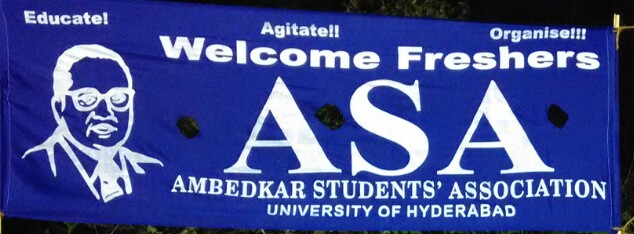
Within Andhra
Pradesh, there emerged the Madiga Dandora, a movement which demanded the
categorization of SC reservations between Dalit sub-castes, Madigas, along with
some other smaller castes as Madigas, are relatively deprived in accessing the
benefits of SC reservations. All over the state, there emerged a phenomenon of
separate Madiga organizations. In the University of Hyderabad also, the
numerically small Madiga community had gone away from ASA and formed themselves
into a separate organization named Dalit Students Union (DSU). This
organization has been facing problems due to its numerically less number. ASA
remained predominantly a Mala organization. Due to mutual hostilities, these
communities could not engage in any negotiations with each other. These
communities always organized themselves with reference to other community. DSU
too organized along the same lines as ASA.
But the difference was that it involved Madiga leaders and employees. If
ASA was supporting one group, DSU used to support another group in the
students’ elections by bargaining for one small post like the cultural
secretary or joint secretary.
There has always
been a stereotype created of Dalits by the upper castes. This time, the round had come to ASA. ASA has
made attempts to take part in the various activities of the University or to
actively participate in the affairs of the University. For instance, they
wanted to participate as mess secretaries in hostel messes. They want to
participate in orchestra by dancing.
They were otherwise left out of all the programmes. They wanted to make
their presence more visible. When they participated as mess secretaries, they
were projected as corrupt. Anybody can be corrupt, but projecting it as the
character of the community lead to a situation of hostility and confrontation.
When they participated in the University functions like orchestra, they were
projected as troublemakers and creators of terror. There are other stereotypes
in circulation as scholarship holders swallowing govt. money etc. They are also
portrayed as violent people. These stereotypes cannot be changed without public
articulation. The major problem of the campus Dalit politics is that when one
articulates the problem of Dalits in public they are bound to be stereotyped,
ridiculed and made to be defeated in a deeply entrenched casteist society.
There was no other possible way to convince the public except to thrash and
scold out of hopelessness and bitterness. This is again branded as violence and
the entire community is depicted as violent. It appears that there is no
possibility of going beyond this in the near future. It needs a deep
politicisation from both sides. For Dalits, language (English skills) and
sophistication is always a problem to express themselves for their genuine
justified positions in the public space of University.
The upper caste
students do not need any organization or agitation since their interests are
always safeguarded by the University system. The nexus between
students-teachers-administration of upper caste is very strong. The whole
system is totally dominated by them. So, their interests are taken care of by
this dominant system. They project themselves as ‘against politics’ and ‘only
for academics’. The imagined threat from the Dalit students too is not ruled
out. After the AMCF, there was no organization formed for upper caste students,
though spontaneously they responded in many issues in the name of ‘students’.
In late nineties, there were efforts from the upper castes to start
organizations. ‘Discovery’ and ‘Bermuda’ are such organizations and which later
formed as ABVP. Both ‘Discovery’ and ‘Bermuda’ doesn’t have any formal
structures. They propagate and circulate stereotypes about Dalits and women
through secret posters. Especially the ‘Bermuda’ publishes secret, vulgar
posters particularly aimed at womens’ activities. These stereotypes are
actively propagated in their informal conversations. They never come in public.
But ‘Discovery’ group organizes public seminars with figures like Arun Shourie,
Gurumurthy of Swadeshi Jagaran Munch etc. Discovery has also been organizing
RSS sakhas in campus. These two groups are active mobilisers and leaders
whenever there is a procession against Dalits. They used to mobilize upper
caste vote and also played a crucial role in choosing candidates from the upper
caste side. They have also developed a strategy to place Dalit, Muslim or women
candidates loyal to the Hindutva ideology to nullify the claims of these actual
groups articulating on behalf of them. With the Hindutva forces in power, they
created an atmosphere to formally begin a branch of the pro-Hindutva, upper caste ABVP in campus. Both upper caste
students and the administration had by then picked up courage to confront and
negate Dalit students on campus. This happened in the early years of this
decade.
Apart from this,
University Discussion Forum (UDF), a liberal upper caste organization, with
leanings towards the CPI (M) is active on campus and had managed to win the
Students Union elections. Though progressive, its strength lies in deliberately
keeping away from ASA, otherwise it will lose its upper caste base.
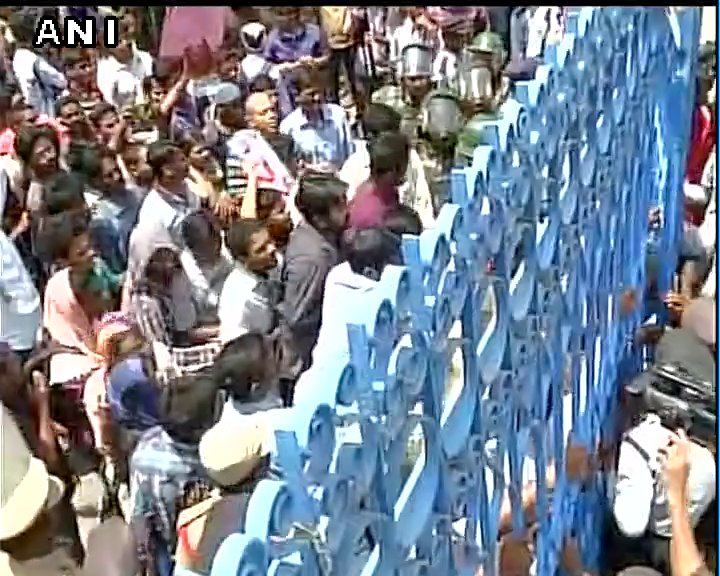
On 13th
January 2002, ten Dalit research scholars of ASA were rusticated from
University of Hyderabad for allegedly beating the chief warden and another
warden. The rustication of students was unprecedented either in this University
or any other Universities of the country. This has once again shown the
vulnerable situation of Dalits even in a modern liberal institution like the
University. This has invited protests from Dalits and other democratic forces
all over the country. This incident is a culminating point for Dalit politics
over a period of a decade in the University of Hyderabad. It provides an
occasion to retrospectively look at the complex and torturous journey of Dalit
politics spanning over more than a decade in an elite University.
In course of
time, the campus is aligned in the lines of United Democratic Alliance (ASA,
DSU, Women’s Collective, United Students Forum, collectively known as UDA), UDF
and ABVP at the time of the Students’ Union general elections of 2005. UDF
panel got elected over UDA and marginalized ABVP. The successive defeats of
ABVP made them to install the portrait of Vivekananda in hostels (as a
propaganda measure), which became a point of controversy. ABVP justified this
as an honour to a national youth leader. The other organizations UDA and UDF
oppose this as an issue of ABVP’s effort to communalisation of campus.
Vivekanada was considered as a symbol of Hindutva appropriated by Hindu
communal forces. ASA has taken a stand that Vivekananda should be opposed as a
Brahminical ideologue who supported the caste system. The undercurrent of struggle over symbols is
an act of political assertion of social groups of the campus. The ABVP poses a
question logically, when the portrait of Ambedkar is allowed, why not
Vivekananda? All these reflect the struggles at a symbolic level between the
students of progressive, lower caste and upper castes.
The entry of the
Dalits into the space of the University not just built a more creative space
within the political atmosphere of the University. It has actually reshaped the intellectual
output from the Social Sciences and Humanities departments. Though the upper caste teachers/scholars
repeatedly blame the Dalits for “bringing down” the academic standards, the
truth is that, the insistent intellectual questioning by Dalit scholars have
actually redefined these very disciplines.
University of Hyderabad, in that sense, is a pioneering institution that
has created many ground breaking dissertations from the nascent Dalit
scholarship. It has been quite a fertile
ground for production of a thriving Dalit intelligentia, both women and men who
are still actively contributing to the literary, cultural, and scholarly
fields. The University students and
alumni very often provide the political leadership for Dalit struggles in
AP.

Friday, June 17, 2016
An Overview of Contemporary Telugu Poetry
An
Overview of Contemporary Telugu Poetry
P. Kesava Kumar
Professor in Philosophy, Delhi University, Delhi
Telugu society has
always been a land of struggles. These struggles have naturally had their
impact on the Telugu literary production. In intellectual realm,
the contradictions of the society are opened up and articulated through
literature. The class struggles are followed by the identity politics. The last
quarter of the century has witnessed the movements that have mobilized women, dalits,
Muslims, and the people of Telangana for a democratic and human society. These
new social movements have been critical about organized struggles and
philosophies of both traditionalism and Marxism. In fact, the new social
movements are well articulated through literature. This new literature has
changed the ideological landscape of literature. The language, idiom, style and aesthetics
have been refreshed and redefined in much more concretely. This new literature
has set the agenda of politics of change. Poetry becomes a medium for the
emerging new intellectuals of Telugu society to express their anger and social
aspirations in contesting the dominance and hegemony. The Contemporary Telugu
poetry of feminist, dalit, and Muslim is fully committed to their own social
experience and celebrated the dignity, self-respect and pride. The literature
has been much closer to life.
Against Feudalism:
Progressive Literature
In Telugu
society, the progressive literature (Abhyudhava
and Viplava) inspired by the Marxism
has set the standards and canons of literature. It is a revolt against the
‘classical literature’ (Sampradaya
sahityam) and romantic literature (Bhava
Kavitvam) of 1920-1940. The progressive literature took new turn in 1970s
by identifying with ongoing revolutionary struggles. The revolutionary
literature (Viplva samityam) has had its mark till 1980s. The poets rebelled
against the ideology of fascism, feudalism and capitalism in support of new
democracy and socialism. The
progressive poetry mostly revolved around the themes of ‘humanism’,
‘revolution’ and ‘classless society’
(rythu coolie rajyam). The poet, Sri Sri is the iconic figure of this
tradition. Apart from progressive literature, we too find different streams of
Telugu poetry such as Anubhuthi(Experiential) and
digambara (Nude). However, in
all these literary traditions, the writers and readers were mostly drawn from
the category of the upper caste middle class male. The entire literary
discourse is centred on either abstract human being or class by erosive of
cultural markers such as caste, gender, religion and region. From 1980s onwards
with the rise of conscious intellectuals from the lower castes and women
exposed the shallowness of the ‘modernity’ and ‘progressiveness’ adopted by the
literary world. In this process, they not only questioned the canons of
literature but also dismissed the celebrated Telugu progressive modernists.
Feminist Poetry
against Patriarchy
From 1985 onwards, feminist poetry came as a strong dissenting voice against
patriarchal structure that mainly responsible for oppression and exploitation
of women. By 1990, feminist poetry has established as a different genre of
Telugu literature. Feminist poetry is a frontal attack on stereotype images of
women, sexuality, gender discrimination and male domination. Private space such
as home, kitchen becomes public discourse. Through the literary craft, the
feminist writers punctured the myth of body, pativravytam (chastity), motherhood and domestic labour and argued
for freedom. The tales of unconcerned personal life got political articulation through this
poetry. Neelimeghalu (Blue clouds,
1993), Gurichoosi Pade Pata are the
earlier collective anthologies of feminist poetry. Jayaprabha
(Yuddhonmukhamga(1986), Vaamanudi Moodo Paadam (1988), Ikkada
Kurisina Varsham Ekkadi Meghanidi (1991) and Yasodharaa Yee
Vagapemduke (1993), Kondepudi Nirmala (Nadileche Gayalu, Hrudayaniki
Bahuvachanam), Vimala (Adavi Vuppongina Ratri)
Volga, Vasanta Kannabiran, Mahe Jabeen, Patibandla Rajini, Ghantasala
Nirmala, Revathi Devi, Silololitha, S.Jaya, K. Geetha, Savitri, Mokkapati
Sumathi , Mandavarapu Hymavathi, Ravulapalli Suneetha, K.Varalakshmi,
B.Padmavathi, Challapalli Swaroopa Rani (Mankena Poovu), M. M. Vinodini, Jupaka
Subhadra, Jelli Indira are among the prominent feminist poets of Telugu
literary world. The feminist poetry rebelled against the prejudiced social
rules in male dominated society: The movement I am told/ it will burn me,/I want to embrace
the sun. /Just once... That’s how I am. /I always want to do/What’s prohibited (Mahe Jabeen,
Physical Geography).They
retaliated against the sexist outlook of
society by asserting themselves:
Looks/From two eyes/dart like needles/roam freely on lumps of flesh…..A day
shall come/when women in this country have/thorns/not only in their eyes/but
all over their bodies (Jayaprabha, Choopulu(Gaze)).
Dalit women poets came as internal critics of feminist poetry by bringing into
the issue of caste oppression faced by dalit women along gender discrimination.
As dalit feminist writer says: When has
my life been truly mine/In the home male arrogance/sets my cheek stinging/while
in the street caste arrogance/splits the other cheek open (Challapalli
Swaroopa Rani, Mankena Poovu)
Dalit Poetry for fistful
of Self-Respect
Dalit literary
movement came in the backdrop of dalit struggles against caste atrocities,
especially against the Karamchedu (1985) and Chunduru massacres (1991). The quest for the search of their own Dalit
identity makes dalit poets to broaden the literary horizons. They declared that
we will write about ourselves. Ideologically they confronted with both
Brahmanism and alternative ideologies such as Marxism. They opened up the issue
of caste as primary social reality and penned for casteless society. The
condemned symbols and life styles are converted into symbols of protest. They
performed the poetry by invoking the collective social memory. They introduced
the dalit language to the Telugu public against textual and sanskritised Telugu.
The early 1990s
poetry anthologies, Chikkanavvutunna Pata
(Thickening Song, 1995), Dalit Manifesto
(1995), Padunekkina Pata
(Sharpened Song, 1996) are set the tone for dalit poetry. At this historical
juncture debated: Who is dalit? What constitutes dalit literature? This
controversy resolved in course of time by considering whatever is written by
the Dalits with their conscious social experience is only qualified to be Dalit
literature. Ambedkarism becomes the ideology of dalit literature.
Dalit movement has
produced many promising young poets. Dalit leaders have become poets. Madduri
Nagesh Babu((Veliwada,(Untouchable
Locality,1997), Meerevutlu?(What
People Are You?,1998), Rachabanda(Village
Square,1997), Naraloka Prarthana ( A
Prayer of This World, 2002), Vidi Aakasam(A
Separate Sky,1999)), Kalekuri Prasad, Pydi Teresh Babu ((Alpapeedanam(Depression in the Ocean,1999)), Hindu Maha Samudram(The Great Hindu ocean,1999), Nenu Naa Vintalamari Prapamcham (Me and
My world of Wonders,2007), Satish Chander (Panchama
Vedam( The Fifth Veda, 1995)), Kathi Padma Rao(( Nallakaluva (Black Lotus,1996 ) Bhhomi
Bhasha, Kattelamopu)),
Bojja Tarakam((Nadiputtina Gonthuka (The
Voice that gave Birth to the River, 1983), K.G.Satyamurthy alias Sivasagar (Nadustunna Charitra, The Ongoing
History,2004), Gaddar (Gaddar Patalu),
Gorati Venkanna, Masterjee, Yendluri Sudhakar ((Varthamanam, The
Present,1985, Vargeekaranam(Categorization)),Sikhamani
((Chilaka Koyya (The Wooden Hanger,
1993), Nagappagari
Sunderraju (Chandala Chatimpu),
Vemula Yellaiah, Challapalliswarooparani (Manankena
Poovu), Salandra, Sambhuka, Thullamalli Wilson Sudhakar, M M Vinodini,
Joopaka Subhadra, Darla Venkateswara Rao
( Dalita Tatvikudu),
G.V.Ratnkar (Matti Palaka), P.C
Ramulu, Juluri Gowrisankar, Prasada Murthy.
Dalit poets protested against the social
practice of untouchability and raised their voice for fistful for self-respect:
‘I am still a prohibited human being/Mine
is an expelled breath/ ..The moment he left a mark of prohibition on my face/My
race/Was gradually murdered (Yendluri
Sudhakar, The Present). I’m the wound of the people, a communion of
wounds./For ages, a slave in a free country,/subject to insult, atrocity, rape,
torture,/someone raising his head for a fistful of self respect./My very
existence in this nation, drunk on caste and wealth,/is a protest( Kalekuri
Prasad, For a Fistful of Self-respect).
The poets constructed the counter history against the figures of Brahminical
mythology by invoking alternative symbols like Ekalavya, Sambuka (Siva Sagar, Nadustunna Charitra). From the
stubs of those thumbs there now sprout nibs of steel/ to write history anew.
((Sikhamani, Vade Asuddha Manavudu (That
Fellow is the unclean Human being, 1984)).
Dalit poetry is determined against
brahmanical history and their writing is committed in demanding the citizenship
and social justice which is denied for generations: In this Country we want a
piece of land/These clouds has to be vanished/These walls must be collapsed/…I
want real citizenship/will you give it?...I want a touch/I want you to shake my
hand with your heart (Madduri Nagesh Babu, What do I want?). They further cautioned the nation that without
the labour of dalit communities, this country could not flourish. With pride
they declared that this nation was produced out of their labour ( Juluri Gowri
Shankar,. Padamudralu,( Foot
Prints)).
Sharpening of Identity Politics: Madiga, Muslim and
Telangana Poetry
With the assertion of new identities such as Madiga, Muslim and Telangana
, the terrain of Telugu literature too has changed remarkably. Dalit literature
too has undergone significant transformation with further assertion of social
constituents of dalit category by 2000s. Madiga poetry (Madiga Chaitanyam), Bahujana Poetry (Ventade Kalalu , Poetry of Backward Castes) are further
democratised the dalit poetry. Muslim poetry has emerged as a new literary
genre after the Gujarat massacre with the poetry anthology, Jala Jala. With the demolition of Babri Masjid , Muslim
community has been pushed to insecurity and terrified further with Gujarat
massacre. In the context of self insulation of community, Telugu Muslim poetry
opened up the ongoing anger and uncertainty of Muslim community through
poetry. As Reflecting on this situation
: Long before I was born/my name was
listed among traitors….Yes, my birthmark is me/my existence, my
citizenship/It’s my ancestral property/inherited from the earth/the sky, the
air/the surroundings I live in/ It’s a wound that never heals( Khadar Mohiuddin,
Puttumacha (Birthmark,1991)). The Muslim poets through their poetry not
only depicted the insecurity and ill-treatment of the community and narrated
the tale of social economic backwardness of the community. Skybaba ( Jaljala
(Ed), 1998), Khaza (Fatwa),
Shajahana (Nakhab), Anwar (Aja (Ed.) ), Iqbal chand (Black Voice, 1995), Khasim Shaik, Afsar
(Valasa (Migration)), Yakoob (Sarihaddu Rekha (Borderline)), Haneef,
Mahe Jabeeen are some of the prominent poets of Muslim poetry.
Telangana poetry has been established in the backdrop of struggle for
separate Telangana state. This poetry is a celebration of the pride of
Telangana and its culture against the exploitation of this region. The
aspirations for Telangana people were well articulated through the cultural and
literary forms. Dalit, Bahujan, Muslim and Women writers and cultural
performers played a key role in Telangana literature. The dalit performer poets
Gaddar, Gorati Venkanna, and Andesree culturally set the political tone of
separate Telangana. At present Telugu poetry is at crossroads looking at the
democratic path to move ahead.
Subscribe to:
Posts (Atom)
