
Tuesday, February 27, 2007


Tuesday, February 13, 2007
Community, Nation and Social Justice:
Interface of Gandhi and Ambedkar
Dr. P. Kesava Kumar
Lecturer in Philosophy
Pondicherry University
Introduction
This paper is an attempt to discuss the political legacy of Gandhi in relation to dominant western political traditions as well as the political practices of contemporary Indian society. It is argued that western political theory is in crisis and its dominant liberal tradition based on weak foundations. The political insights provided by the indigenous thinkers may answer this crisis. The communitarian streak of the Indian thinkers with a blend of liberalism to certain extent resolves this crisis. Gandhi as a leader led the nationalist movement against the dominance of British colonial rule, and as a thinker he operated on the imagination of the community of ideal Hindu Society. At the same time Ambedkar is critical about hindu social order in any of its form and argued for moral community based on Buddhism. In the light of social justice the strength of these thinkers will be assessed by locating them in the context of nationalist movement.
The relation between individual and collective has explained by the many scholars, in different contexts with different concepts. The ‘social’, ‘community’, ‘nation’, ‘religion’, ‘language’, ‘region’ is the markers of collectivism. Each of these terms has different connotation and meaning. In the contemporary political theory, concepts of ‘community’, ‘nation’ and ‘social justice’ got attention and there are several attempts to redefine these concepts. These three concepts, seems to be distinct on their own, but are interrelated in building nation and strengthening democracy. Against the liberal individual, community becomes discussion point. And against the western colonialism, the discourse of nationalism got its importance. The problems are identified with both extremes and evaluated the strength and weakness of these positions on the basis of justice, common good, rationality or freedom.
With a specific purpose to evolve a theory of justice, this paper has probing into notion of ‘community’ and ‘nation’ by explaining through contemporary Indian thinkers such as Gandhi and Ambedkar. The intervention of these thinkers into larger streams of political philosophy provides some insights in exposing the weakness of dominant liberal political tradition by offering a solution to the crisis of liberal theory. Historically both of these thinkers are exposed to western education and its value system and challenged the western colonial rule as nationalists. Though they have agreement on common point for the freedom of the nation, but have differences in conceptualizing the Indian social reality. The world views of these thinkers have different implications in contemporary struggles of Indian society with the rise of hindu religious nationalism and dalit movement.
In understanding their political philosophy, the following questions will help in articulating the ultimate meaning and purpose of these thinkers: What is his conception of the human being and society? What are the cultural and historical roots of these conceptions in his thought? In what way does he connect democracy and social inequality? How does he resolve the question of individual and community? What are his conceptions of rights, freedom and justice that flows in both his thought and action? What kind of theory does he propose in bringing out the relationship between State and religion?
Both Gandhi and Ambedkar argued infavour of reflexive individualism as against liberal abstractive and possessive individual. Their individual is located in the social and cultural context. The individual had source in religion. For them religion acts as a moral community. Both of them differ with Marxism to certain extent by emphasizing on spiritualism. Gandhi invokes Hinduism and upholds its varnashrama dharma. Of course he argued for reformed Hinduism by opposing untouchability and treating women as equal. The ultimate end for Gandhi is Ramarajya through ahimsa, satyagraha and sarvodaya. Ambedkar considers Hinduism doesnot qualify to be called as religion for its anti social functioning and it could not be reformed. For him the ultimate end is equality, liberty and fraternity. One may found these values in Buddhism. Gandhi romanticizes the village for its simplicity and strong collective traditional values against the modern mechanistic world. Ambedkar argued that village is a centre of maintaining hierarchy and practicing untouchability. Gandhi gave utmost importance to political reform in the programmes of nationalist movement and tried to postpone the social reform in a given situation. For Ambedkar social precedes political. However, both the thinkers overcome the western model of tradition-modern dichotomy and viewed moral community, nation and social justice in their writings and actions from different perspectives.
It is well recognized and debated that contemporary western liberal political theory is in crisis. As it is noticed by some scholars the western liberal tradition based on the weak foundations. And at the same time, argued that different notions of modernity exist prior to the liberal tradition. It had the implication that west does not had monopoly over its claims of modernity and had different trajectories in different socio cultural contexts. In this context, the Indian thinkers like Gandhi and Ambedkar offers a solution to overcome this crisis from different perspectives. The theory and practice culminated in both leaders and emerged as power symbols of contemporary indian society. Both of them imbibed strong liberal impulses and always looked individual in relation to society. Both of them ultimately developed their theories of politics on moral autonomy of individual rather abstract individual. The morality has seen inseperable from the shared social beliefs lies such as in community, religion or nation. Debating Gandhi and Ambedkar in the contemporary Indian political scenario, not only provide two different view points on communitarian politics, and had greater implications for democracy.
Building of Nation state
Nationalism is an ideology that places the nation at the center of its concerns and seeks to promotes its well being. The definition of nation ranges from objective to subjective factors. The objective factors are such as language, religion, customs, territory and institutions, and the subjective factors such as attitude, perceptions and sentiments. As the Joseph Stalin explains from the former position, ‘A nation is an historically constituted, stable community of people, formed on the basis of a common language, territory, economic life and psychological make up manifested in a common culture.’ The subjective position as reflected in Benedict Anderson, ‘it is an imagined political community- and imagined as both inherently limited and sovereign. Both of them have limitations in terms of including certain nations as nation. However, nation is not state and it is not an ethnic community. Nations are felt and lived communities whose members share a homeland and a culture. Nation is not an ethnic community despite some overlap in that as both belong to the same family of phenomenon of collective cultural identity. The ethnic community usually has no political referent and in many cases lacks a public culture and even territorial dimension. The nation on the other hand, must occupy a homeland of its own, at least for a long period of time, in order to constitute itself as nation. It also needs to evolve a public culture and desire some degree of self determination.[1]The nationalism of the 19th century Europe emerged out of the breakdown of the societies which embraced diverse ethnic, cultural and linguistic groups into relatively homogeneous communities. Where as nationalism of the 20th century India led to the fusion of people who spoke different languages, who belonged to different culures, and who subscribed to distinct historical traditions, into a single political community called nation[2].
The word ‘nation’ and political ideologies based on nation is loaded with emotions and had the capacity to manipulation Indian politics. Any claim or struggle has to be silent in front of the nationalism. Most of the radical struggles like Naxalite movements are forced maintain silence on this issue, otherwise dubbed as anti-national. For Parties like BJP came to power so easily with exploitation of sentiment of nationalism. They are consciously propagated and succeeded to certain extent by equating Indian with hindu through their middle class propaganda machinery. In the name of our nation and Indian identity attracted people from all castes including dalits and adivasis. This is coincided with people’s experience of threatening loss of culture and collective life in the wake of globalization. Within no time people realized that hindutva forces limited to cultural nationalism in a selected way, but not connected nationalism in economic and social development. They never bothered about swadeshi economy. Social equality and social justice are not in their project of nationalism. Cultural nationalism has no meaning unless until connects to social and economic equality. In the scheme of this upper caste Indian nationalism, social aspirations and imagination of dalits, adivasis, women got marginalized. Reflecting on this kind of situation, insight focused on the issue of nationalism and debated various questions in relation to this.
On the question of what makes a nation , Telugu writer Gurujada Appa Rao first modernist writer said that, ‘Nation is not just land, it is of people’(Desamante matti kadoyi, Desamante manushuloyi).Bendict Anderson argues that nation is nothing but the imagination of a community. Taking clue from this Partha chatterjee explains that building of the nation state taking place simultaneously, one from the social aspiration and anxieties of uppercaste hindu middle class from the above and so far marginalized lower castes from the below.
Ambedkar confronted with Gandhi and so called nationalist congress on this issue of freedom of the depressed castes. He hold the opinion that social precedes the political. Social equality only guarantees the political equality. From Gandhi to BJP hindutva are not interested in addressing this question. Rather they feel irritated when dalits raised this question. When dalits are asserting national identity through their political struggles, it needs critical and creative intervention on this issue. Otherwise ends up with dominant discourses. The editorial and editorial collective reflects that Insight is clear in understanding the question of nationalism and raised the relevant questions in making dalit nationalism. After all any nation came into existence, with the struggles of the people .Struggles shapes the nation. History of the people could not be manipulated for ever. I hope with the intense struggles of dalits and other marginalised groups democratic nation will come into existence.
Crisis of western political philosophy
Western social and political philosophers, since its beginnings, in the writings of Plato and Aristotle, have been primarily concerned with a set of basic questions about the nature of authority and political obligation, the idea of liberty and its proper limitations, conceptions of the just and good society, and the best form of government. These problems naturally arise when the perceived interests of individuals, groups, or institutions came into conflict, particularly in the times of general social change and political instability when people became increasingly aware of new possibilities. Individuals, groups, or nations will demand more freedom, recognition of rights, greater justice in the distribution of goods, or a larger share in political decision-making. For the social contract theorists of the early modern period- Hobbes, Locke, Rousseau and others- the problem of political obligation was fundamental. They aimed to give a general account of why individuals are obliged to obey the laws of certain governments, at least under some conditions. The grounds of obligation is its morality, rationality or common good?
Historically, Greek thought followed the Christian natural law. In the west, Christian natural law was undermined by the individualism of seventeenth century. This period was informed by the new vision of progress and freedom. Science had revolutionized people’s life and thinking. Technological inventions brought in new wealth to society. Centralized and efficient nation states emerged in the world. Colonizing efforts of Europeans were happening in large scale. Relationship between individual and god was replaced by the relationship between individual and individual as the foundation of social enquiry. This individualism become the basic characteristic of the subsequent liberal tradition. The idea of social initiative and social control surrendered to the idea of individual initiative and individual control. In simple terms, new material conditions gave birth to new social relationships and new philosophy was evolved to afford a rational justification for the new world which had come into being. This new philosophy became known as liberalism. Liberalism acquired different flavors in different national cultures. Several non-western countries from 1950s onwards, have their own versions of mixed liberalism, not only borrowed from the west but also blended with their own cultural practices.
Freedom of an individual is a basic value and many thinkers tried to explain the restriction on freedom. Philosophers such as J.S. Mill have tried to give an account of what makes freedom valuable, under what conditions. An adequate theory of this type can serve as the basis for rational and principled restraint when liberty conflicts with other basic values. Justice is sometimes said to be the primary virtue of social institutions. It is one of the most significant respects in which legal and political arrangements, as well as economic systems and social hierarchies may be evaluated. Debate over the questions of distributive justice, especially-i.e. who is entitled to what share of benefits of social co-operation, and who must bear what burdens has always been in the forefront of western political philosophy. Libertarians such as Nozick follow classical liberals (particularly Locke) in defending a right to private property based on conceptions of legitimate acquisition and voluntary transfer.[3] The representative thinkers of egalitarians like Rousseau, Rawls and Ronald Dworkin emphasize the arbitrariness and deprivation, which appear to be a necessary part of such a system of ‘natural liberty’. They argue for more equal distributions of wealth and opportunity through political means, based on conceptions of equal worth of human beings.[4]
The difficulties in liberal theory lies in its basic foundations of seventeenth century individualism and its quality of possessiveness. The possessive quality lies in the conception of the individual as essentially the proprietor of his own person or capacities owing nothing to society. The individual was seen neither as a moral whole, nor as a part of a larger social whole, but as a proprietor of himself. The basic assumption of possessive individualism –that man is free and human by virtue of his sole proprietorship of his own person, and that human society is essentially a series of market relations, were deeply embedded in seventeenth century foundations. This theory may correspond with the market society of seventeenth century. In this relation of ownership, the actual freedom and actual prospect of realizing their full potentialities lead backwards to recognising the nature of the individual. The individual, it was thought, is free in as much as he is proprietor of his person and capacities. The human essence is freedom from dependence on the wills of others, and freedom is the function of possession. Society becomes the web of free equal individuals related to each other as proprietors of their own capacities. Society consists of relations of exchange between proprietors. Political society becomes a calculated device for the protection of this property and for the maintenance of an orderly relation of exchange. We could not say that seventeenth century concepts of freedom, rights, obligation and justice are all entirely derived from the concept of possession. But it can be shown that they were powerfully shaped by it.
Later theories of politics tried to articulate from the point of community or individual in relation to community. The inconsistency lies inherently in the market society itself. Market society automatically brings the class differentiations. The propertied class would like to hold power over the subordinate classes. Men no longer saw them selves fundamentally equal in an inevitable subjection to the determination of market. Alternatives emerged for the market system. Articulation of proletarian politics gave a serious blow to the liberal politics. There are altogether different assumptions about man and society. The community has replaced individual. Marxist theory aims at the radical change in society and its human relations. Human society has seen from the perspective of the class considers human being as primarily a producer. His relations are determined by his involvement in social production. Other than the Marxist notion there is a conservative political theory would like to see society from the point of view of community. Conservatism has reverence for tradition, religion and age old custom. Edmund Burke is the one of the examples for conservative tradition. Burke more than any thinker of eighteenth century approached the political tradition with a sense of religious reverence.
Conservatives stress the importance of tradition, custom and of network of longstanding groups and associations, all pre- requisites of social order. State plays a central role in conservative thought. It is the backbone of social order and authority, the guarantor of social hierarchy. As per the conservative views, the inherent imperfections of human nature make a strong state necessary. It is needed to control the anti-social impulses of the individual. State has been seen as a crucial institution necessary to prevent society from dissolving into disorder and chaos. The conservative thinkers consider the forms of inequality and privilege as ineradicable and necessary elements of society. ‘Inequality of function, role and power is as necessary to the social order as a whole as to the family’. According to conservative thought without hierarchical structure no society can survive. As per the traditional conservative perspective, social order is not and can never be achieved spontaneously by the free play of individual activities as claimed by liberals and anarchists. Social order has to be maintained through the strong leadership of those who hold positions of political responsibility. It does not mean that state is the only agency which maintains social order. The individualist position is ‘radical’ because of the implicit commitment to subject all beliefs and institutions to review, according none a privileged status of critical immunity. The communitarian position is ‘conservative’ in the sense that it accepts the validity of central categories of moral self-description that are entrenched within the practices and institutions of society.
In the late1970s political scientist Fred R. Dallmayr reiterated the statement of Peter Laslett, “the great tradition of theoretical literature stretching from Hobbes to Bosanquet had been broken and that for the moment, anyway, political philosophy is dead.”[5]This is not exactly true. But it shows there is no break in development of political philosophy and existing theories got some setbacks. Of course there are struggles of 70s, students revolt and Vietnam debacle changed the purpose and meaning of public life. Political thought shares the affliction of philosophy. True philosophy makes us to learn again to see the world. It seeks to render political life intelligible, political theory has to remain attentive to the concrete sufferings and predicaments of people and cannot pretend prematurely to knowledge or understanding. The crisis in political philosophy may be understood with the changed socio- economic developments and the unrelatedness of intellectual to the politics. In twentieth century, western political philosophy is marked with its defense of liberal democracy and legacy of civil rights against totalitarian or repressive forces. The economic practices and scientific rationality of west got different meaning in the developing nations. In recent times, the culmination of western science and economics leading towards dominance over other parts of the world invites competition and confrontation at global level. This situation has compelled the west to rethink and reformulate its central premises of its philosophy, and its conception of ‘reason’. And at the same time, there is a need to critically understand what constitutes ‘subjectivity’ and its cognitive activity. This dilemma seems to be aptly captured by Fred Dallmayr, ‘In the domain of political thought, the contemporary dilemma can be phrased broadly in terms of the relationship between ‘contract’ and ‘community’.”[6] Society is of collectives and generates political community. Far from involving only the aspect of inter subjective or inter individual contracts, a revision or modification of individualism in the light of communal bonds necessitates a general reconsideration of man’s relation to the world and nature-a reconsideration that inevitably conjures up the peril of objectivism and naturalism. Contemporary political theory appears precariously lodged at the cross roads of liberal individualism and post individualist communalism.[7]Christian Bay elaborates this in his article ‘from contract to community’, he links up the major predicaments of post-industrial society with the basic assumptions and preferences of ‘individualistic contract liberalism’ as inaugurated by Hobbes and Locke and it manifested in different forms. He notes that, liberals have ‘persistently tended to cut the citizen off from the person’, putting on their pedestal ‘a cripple of a man’ without a ‘moral or political nature’ and without ‘moorings in any real community’[8].
Communitarian critique of liberalism
Communitarians have sought to deflate the universal pretensions of liberal theory. Libertarianism is an individualist philosophy, with a strong focus on the rights of citizens in a democracy. Whereas the libertarian Rawls seemed to present his theory of justice as universally true, communitarians argued that the standards of justice must be found in forms of life and traditions of particular societies and hence can vary from context to context. Rawls argues that we have a supreme interest in shaping, pursuing, and revising our own life-plans. He neglects the fact that our selves tend to be defined or constituted by various communal attachments (e.g., ties to the family or to a religious tradition). Communitarians believe that there is too much focus on these concerns, arguing that "the exclusive pursuit of private interest erodes the network of social environments on which we all depend, and is destructive to our shared experiment in democratic self-government. They believe that rights must be accompanied by social responsibility and maintenance of the institutions of civil society if these rights are to be preserved, but libertarians believe that government actions to promote these ends actually result in a loss of individual liberty. Alasdair MacIntyre and Charles Taylor argued that moral and political judgment will depend on the language of reasons and the interpretive framework within which agents view their world, hence that it makes no sense to begin the political enterprise by abstracting from the interpretive dimensions of human beliefs, practices, and institutions. Michael Walzer developed the additional argument that effective social criticism must derive from and resonate with the habits and traditions of actual people living in specific times and places. In After Virtue, Alasdair MacIntyre defended the Aristotelian ideal of the intimate, reciprocating local community bound by shared ends, where people simply assume and fulfill socially given roles.
The debate between liberals and communitarians is in part a dispute about what democracy requires. Liberals insist that democratic self-government requires a fair and neutral political framework in which individuals can enjoy freedom and be treated as equals. As such, a democratic state must be as minimal as possible; its primary function is to maintain the social conditions and political institutions under which free and equal persons can live harmoniously together. On the communitarian view, democracy requires that individuals embody the virtues that make them capable of the true freedom of self-Government, and that these virtues can be properly nurtured only within the context of a proper community. Therefore, the state in a democratic society must undertake the project of forming its citizens' characters by providing the necessary conditions under which communities, and hence the individuals who compose them, can flourish. A state that fails to embrace this formative role is illegitimate since it fails to provide the conditions necessary for freedom; it "cannot secure the liberty it promises, because it cannot sustain the kind of political community and civic engagement that liberty requires.
Liberals posit a self that is by nature autonomous and thus enters into social associations by voluntary choice. The democratic state is one among many associations that the self may choose to join, and it does so as a way of furthering its own interests. Accordingly, the democratic state must remain neutral with regard to questions about what individuals ought to pursue in life, about what kind of life is good. The individual's capacity to choose a conception of the good for himself is the essence of liberty. The policies of a democratic state must therefore not presuppose any specific moral conceptions beyond those required for protecting the individuals it governs. Communitarians argue that such a view of the nature of the self is false. According to communitarians, selves are essentially tied to the social contexts within which they live. Such contexts form the dispositions, desires, interests, and commitments of individuals. Communitarian thinkers in the 1980s such as Michael Sandel and Charles Taylor argued that Rawlsian liberalism rests on an overly individualistic conception of the self. Whereas so close to us that they can only be set aside at great cost, if at all. This insight led to the view that politics should not be concerned solely with securing the conditions for individuals to exercise their powers of autonomous choice, as we also need to sustain and promote the social attachments crucial to our sense of well-being and respect, many of which have been involuntarily picked up during the course of our upbringing.
There is a strong liberal stream exists in Indian political thought and the activities of state as it is adopted some of the features of western liberal democracy. And at the same time, there are historic nationalist struggles against the British colonialism based on the imagination of Indian community grounded on its shared history, culture and philosophy. In the late sixties, against liberal democracy, radical left movements came to forefront, by emphasizing working class as community. It had its limitation by down playing caste, religion and region. In the decade of eighties, the communitarian politics came to lime light with its full potential. This happened on one hand, with the rise of hindu nationalists attempt to define Indian nation as par with cultural traditions of hindu social order at the cost of marginalizing subaltern groups such as dalits, adivasis and women in a political process. On the other hand, the identity politics centred on caste, gender and region articulating their democratic social aspiration and provided a vision to reconstitute the social and political institutions. In this context, the communitarian politics has to be evaluated rationally, keeping the idea to strengthen the democratic nation. The common good plays a decisive role in pluralistic context.
Gandhi’s Hind Swaraj
Gandhi rejects collectivist theories of both state and society. He argued that only the individual could exercise conscience, and therefore morally legitimate power. The individual always to be treated as end in itself, while social institutions are always to be treated as colligible means to some greater end. The satyagrahi should be active politics if he can stand firmly for social justice and initiates constructive change. Where he can not, he must practice non cooperation.[9] He firmly believing in the fundamental unity of life, he rejected any distinction between public and private, between secular and sacred, and ultimately between politics and religion. Religion for Gandhi signifies spiritual commitment which is total but intensely personal, and which pervades every aspect of life.
India is known for its diversity in terms of caste, religion, language and region. He managed to derive a romantic political community which embraces many caste groups, religions into a common shared tradition. The structure of Indian society as understood by Gandhi, is characterized by social groups with diverging instead of converging social loyalties. But it was possible Gandhi argued, to devise a focus of loyalty that could knit such social groups into a creative political society. The nationalist movement he launched against British has operated on this loyalty principle.[10]
Gandhi interpreted ‘swaraj’ as self rule, i.e. also self control exercised by the individual. For Gandhi individual is the focus of the nation and interpreting the nation as essentially consisting of individuals who feels that they belong to it. Further by emphasizing the spiritual unity of all individuals Gandhi could pre suppose an immanent solidarity which was much stronger than abstractly conceived national sovereignty. This spiritual unity and self control is attained by right action, restraint and discipline. Self control can be attained only if there is complete freedom from all passions such as anger, hatred and selfishness which may arouse violent action that leads the self into bondage.[11]
In Hind Swaraj Gandhi equates modernism with sensual self-gratification, and condemns it primarily for this reason. The modern world view not only alienates us from nature, but also alienates our desires from any moral end. The teleology of the ancients, that which gave their life its ultimate meaning and purpose, has been eliminated in modernism.
In Hind Swaraj, as Anthony J. Parel has pointed out, makes a significant difference between a genuine nation formed as community (praja) and a nation of individuals merely held together by state power (rashtra). As opposed to the received view that it was British administration and British railways that made India a nation, Gandhi claimed that "India has been one country right from ancient times." Pilgrim saints, who walked the length and breadth of the Indian subcontinent, unified India centuries before it was linked by iron rails. The fact that Gandhi claims a pre modern origin for the Indian nation does not necessarily mean that his political views are pre modern. His views on nationhood are not modernist either, for the modern state, as we have seen, is seen as analogous to the individual social atom writ large on the international level. As Parel states: "[Hind Swaraj] does not propound the modern concept of nation in so far as the latter is based on the notions of brute force, the priority of national interest, and a principle of exclusiveness based either religion, or language, or race." Even the relatively innocuous state apparatus of liberal democracy does not escape Gandhi's critical eye. Gandhi's vision of nationhood is one based on decentralized local control, assimilation and tolerance of cultural differences, and above all, nonviolence.
Complete independence through truth and non violence means the independence of every unit, be it a humblest of the nation, without distinction of race , color and creed. This independence is never exclusive. Sarvodaya rejects the utilitarian principle of greatest good of the greatest possible number’, because it does not admit any sacrifice. Gandhi’s emphasis on sarvodaya, on sacrifice and social harmony, has led some observers to believe that thewas against the individualism. According to Gandhi man alienates himself from the identity of god, man and the world.
Mission of Social Justice: Ambedkar
Unlike the dominant Indian philosophical traditions, his political thought is rational rather than speculative. In assessing the political philosophy of Ambedkar, the existing language of political traditions is not enough to capture his thought. He does not mean that his philosophy has an affinity and difference with the liberal, conservative and radical characterization of existing political traditions. This pragmatic approach is an innovative contribution to Indian political theory and practice. The essence of his pragmatism is to make Dalits, a center of any emancipatory project. His conception of community is very novel. He does not confirm to either Hindu ideal community or Marxist conception of community based on participation in production process. His conception of community is moral and ethical. It is not automatically available for participation in common affairs. His idea of community has to be created through hard and torturous process of moral transformation. When Ambedkar criticises Hindu community for its oppressive nature, he does it with a standard of individual liberty and freedom. When he is talking about suffering of individual members of Dalit community he is projecting an ideal model community based on equality, liberty and fraternity. So it is not correct to call Ambedkar as either a fierce individualist or as a strong communitarian. Ambedkar argued infavor of ideal community by pointing out the hindu community for its inhuman, oppressive and anti democratic ideals. The caste system prevents common activity and by preventing common activity it has prevented the hindus from becoming a society with a unified life and a consciousness of its own being.’[12]An ideal society should be mobile, should be full of channels for conveying a change taking place in one part to other parts. It is an ideal society there should be many interests consciously communicated and shared. There should be varied and free points of contacts with other modes of association. …fraternity, another name for democracy.. it is a primary more of associated living, of conjoint communicated experience[13].only when hindu society beces casless society that it can hope to have strength enough to defend itself. Without such internal strength, swaraj for hindus may turn out to be only a step towards slavery.[14]
Overcoming Tradition and Modernity dichotomy
The modern world view is characterized by universalism, rationalism and secularism. Modernity is opposed to the religious world view which is traditional. Tradition involves uncritical acceptance of the past which is in the form of dogmas, beliefs and super structures. Tradition is accumulated knowledge of the past which comes to its inheritors in the form of patterned hought and formula. Basically tradition isvested in religion and its irrational and mythical astructures. It is argued that contrary to tradition, modernity brings change in the attitudes, values and orientation of thinking and mental make up of the individual so as to make him/her rational , secular, liberal, self confident in a changing world. Modernity certainly involves break with the past. Reasoning plays predominant ole to evaluate beliefs, opinions, dogmas etc. modernity assumes that scientific thinking should have precedence over emotions and non-rational thought. Modernity also involves changes in the socio-economic and political structures facilitating industrialization , urbanization and democratization. From the economic point of view, modernity involves reorientation of the social structure bringing about material prosperity through increasing expansion of the productive forces of society and by equitable distribution of wealth. In short modern world view is based on empirical and scientific knowledge, and is incompitable with tradition on all important aspects of life.
It is argued by some thinkers that there is a dichotomous opposition between tradition and modernity. Modernity is considered to be the anti- thesis to tradition. But many scholars for different reasons contested the view that there is any dichotomy between tradition and modernity. Also some of the nationalist thinkers questioned the dichotomy between tradition and modernity. They challenged the hitherto dominant perspectives on modernity. Nationalist thinkers argued that modernity which is equated with industrialization, scientific and technological advancement was limited to western countries. the so called modernity suited colonial interests at the expense o colonized. Keeping this view in mind, which was put forward by the western colonial countries, was questioned. Gandhi’s ‘Hindu Swaraj’ in a fundamental sense, contested the above view. We can see in the thought of Gandhi a blend of tradition and modernity. He tried to integrate new patterns of thought and action on traditional culture. He attempted a merger of the three levels of Indian social system, viz., social stratification, culture, and polity into a pattern so that the break down of Indian tradition could be averted. Gandhi’s critique of western civilization ‘was critique of modernity and his central argument is that no enduring alternative can be pursued unless that alternative negotiated to the skills, capacities and wisdom of people.’[15]
When Vivek Pinto calls Gandhi’s work "critical traditionalism" and when Madhuri Sondhi suggests that Gandhi integrates Hindu dharma into modernism and that Hind Swaraj represents both a critique and an appropriation of modern ideas, both these authors are moving towards a constructive postmodern Gandhi. Indeed, Thomas Pantham has already arrived at this interpretation: "[Gandhi's] project . . . is one of overcoming modernism without regressing to traditionalism. In his approach, there is a merging of the reconstruction of Indian tradition and the reconstruction of Western modernity."
The contemporary Indian thinker, Ambedkar, also tried to overcome the tradition-modernity dichotomy. The critique of the tradition is accompanied in Ambedkar b refusal to accept readymade alternatives manufactured in the west. His philosophy is essentially ethical and religious and he keeps away from western thought. And at the same time, he attacked Hinduism and its claims as religion. His comment on Hinduism is illustrative of his position. ‘it is a misnomer to call it religion. Its philosophy is opposed to the very thing for which religion stands.’ Hence he considers Hinduism as anti-religious as for him, religion is love of truth. He upholds the moral basis of life while allowing critical reason to operate. He considers Buddhism as the only religion which can respond to the demands of modernity and culture. For him, Buddhist teachings are infallible and they are not making a claim to supernatural origin or authority. Buddhist teachings, he believes, appeal to reason and experience. By holding on to religiousness, he transcends the tradition-modernity dichotomy. He is critical of modernity and highlighted that the priority of social reconstruction can not be achieved without taking into account the legacy of tradition. He further considers that legal and political institutions do not have the capacity to reconstruct social solidarity, and therefore tries to provide a social basis for the liberal and political ethos which does not mean an uncritical acceptance of western modernity or indigenous traditionalism.
Conclusion:
How the issue of caste and untouchability viewed by Gandhi and Ambedkar is decisive in assessing their political philosophy. The manner in which they differ from western liberal tradition and their proposal of moral community is crucial in initiating a dialogue with communitarian politics. The striking difference exists between Gandhi and Ambedkar on the conception of moral community/individual .Gandhi approached this problem from the caste hindu point of view and made an attempt to transform them at individual level. Ambedkar is critical about hindu social order from the point of dalits, the oppressive communities.
It is true that for Gandhi, Swaraj is unattainable without removal of the sins of untouchability as it is without hindu-muslim unity.[16] Gandhi claimed that the heart of the caste hindu could be changed by applying moral pressures within the framework of the hindu tradition. As Bikhu Parekh rightly pointed out, Untouchability was both moral and political problem. Gandhi’s campaign was conducted only at the moral and religious level. He concentrated on caste hindus rather than harijans, as appealed their feelings of shame and guilt, and succeeded in achieving his initial objections of discrediting untouchability and raising the level of hindu and, to a limited extent, harijan conscience. Since he did not organize and politicize the harijans, stress their rights and fight for a radical reconstruction the established social and economic order. Gandhi’s campaign was unable to go further. It gave harijans dignity but not power; moral and to some extent, social but not political and economic equality; self respect but not self confidence to organize and fight their own battles. It integrated them into the hindu social order but did little to release them from the cumulative cycle of deprivation. [17]
Unlike the unity argument put forwarded by Gandhi , Ambedkar’s critique provides a justice argument against caste system. Ambedkar makes difference between a (voluntary) political community, within which an individual exercises his legal rights, and a (coercive)cultural community within which individual could not even formulate their aims.A political community, argued Ambedkar may not be co-extensive withone cultural community, as is envisaged by the nation state. Ambedkar by arguing for the rights and basic needs of dalits, he challenges the assumptions of both nationalistic politics and indigenous communitarian politics.[18].
Ultimately truth for Gandhi as explained by Akeel Bilgrami, is not a cognitive notion at all. It is an experiential notion. It is not propositions purporting to describe the world of which truth predicated, it sonly our own moral experience which is capable of beingtrue..it is what in the end underlies his opposition to the enlightenment, despite the undeniably enlighten elements in his thought including his humanism and the concern that our moral judgments to be relevant to all people.[19] Ambedkar seems to provide an interesting point while talking about interrogating traditions of dominant groups and also becomes necessary to create critical, rational and democratic traditions by interrogating uncritical aspects of socio – cultural traditions of Dalit communities. The moral community of Ambedkar satisfies both test of reason and justice. Democracy needs not only equality at spiritual realm and should extend to every channel of life by providing equal opportunities to everybody to participate in it.
[1] Davis,Niva Yuval. Gender and Nation, Sage : London, 1997 p.13
[2] Kumar, Ravinder. Class, community or Nation ? Gandhi’s quest for a popular consensus in India. Modern Asian studies III, 4, pp.357-376
[3] Kymlicka, Will. Contemporary Political Philosophy: An Introduction. Oxford: Clarendon Press, 1990. (pp.95-155).
[4] Knowles, Dudly. Political Philosophy. London: Routledge, 2001. (P: 177-237).
[5] Dallmayr, Fred R. ‘Political Theory at Cross Roads’ in From Contract to Community, Marcel Dekkar, Inc, New York, 1978. p.1
[6] Ibid.p.9
[7] Ibid p.9
[8] Bay, Christian, “Thoughts on Liberalism and Post- Industrial Society” in From Contract to Community. P.29-45.
[9] Iyer Raghavan Moral and political writings of MahatmaGandhi Vol.1 OUP, Delhi, 1986, p.7
[10] Kumar, Ravinder. Class, community or Nation ? Gandhi’s quest for a popular consensus in India. Modern Asian studies III, 4, p.376
[11] Rothermund, Indira The individual and society in GHandhi’s political thought , Journal of Asian studies Vol.28. No.2 (Feb.1969) pp.313-320.
[12] Dr.babasaheb ambedkar writing and speeches. Vol. 1 p.51
[13] Ibid p.56
[14] Ibid.80
[15] Rodrigues, Valerian , “Making aTradition critical: Ambedkar’s Reading of Budhism”, In Peter Robb, Dalit Movements and Meanings of Labour in India (Delhi: Oxford University Press, 1993), p.305
[16] Gandhi (young India, 29th December 1920)quoted in Dr.babasaheb ambedkar writing and speeches.
Vol. 9 p.37
[17] Parekh, Bikhu colonialism, Tradition and reform an analysis of gandhian political discourseSAge ;, 1987 p.245-246
[18] Verma, Vidhu Colonialism and Liberation- Ambedkar’s quest for Disrtibutive Justice, EPW, September 25, 1999
[19] Bilgrami, Akeel Gandhi, the Philosopher, EPW, September27,2003
Interface of Gandhi and Ambedkar
Dr. P. Kesava Kumar
Lecturer in Philosophy
Pondicherry University
Introduction
This paper is an attempt to discuss the political legacy of Gandhi in relation to dominant western political traditions as well as the political practices of contemporary Indian society. It is argued that western political theory is in crisis and its dominant liberal tradition based on weak foundations. The political insights provided by the indigenous thinkers may answer this crisis. The communitarian streak of the Indian thinkers with a blend of liberalism to certain extent resolves this crisis. Gandhi as a leader led the nationalist movement against the dominance of British colonial rule, and as a thinker he operated on the imagination of the community of ideal Hindu Society. At the same time Ambedkar is critical about hindu social order in any of its form and argued for moral community based on Buddhism. In the light of social justice the strength of these thinkers will be assessed by locating them in the context of nationalist movement.
The relation between individual and collective has explained by the many scholars, in different contexts with different concepts. The ‘social’, ‘community’, ‘nation’, ‘religion’, ‘language’, ‘region’ is the markers of collectivism. Each of these terms has different connotation and meaning. In the contemporary political theory, concepts of ‘community’, ‘nation’ and ‘social justice’ got attention and there are several attempts to redefine these concepts. These three concepts, seems to be distinct on their own, but are interrelated in building nation and strengthening democracy. Against the liberal individual, community becomes discussion point. And against the western colonialism, the discourse of nationalism got its importance. The problems are identified with both extremes and evaluated the strength and weakness of these positions on the basis of justice, common good, rationality or freedom.
With a specific purpose to evolve a theory of justice, this paper has probing into notion of ‘community’ and ‘nation’ by explaining through contemporary Indian thinkers such as Gandhi and Ambedkar. The intervention of these thinkers into larger streams of political philosophy provides some insights in exposing the weakness of dominant liberal political tradition by offering a solution to the crisis of liberal theory. Historically both of these thinkers are exposed to western education and its value system and challenged the western colonial rule as nationalists. Though they have agreement on common point for the freedom of the nation, but have differences in conceptualizing the Indian social reality. The world views of these thinkers have different implications in contemporary struggles of Indian society with the rise of hindu religious nationalism and dalit movement.
In understanding their political philosophy, the following questions will help in articulating the ultimate meaning and purpose of these thinkers: What is his conception of the human being and society? What are the cultural and historical roots of these conceptions in his thought? In what way does he connect democracy and social inequality? How does he resolve the question of individual and community? What are his conceptions of rights, freedom and justice that flows in both his thought and action? What kind of theory does he propose in bringing out the relationship between State and religion?
Both Gandhi and Ambedkar argued infavour of reflexive individualism as against liberal abstractive and possessive individual. Their individual is located in the social and cultural context. The individual had source in religion. For them religion acts as a moral community. Both of them differ with Marxism to certain extent by emphasizing on spiritualism. Gandhi invokes Hinduism and upholds its varnashrama dharma. Of course he argued for reformed Hinduism by opposing untouchability and treating women as equal. The ultimate end for Gandhi is Ramarajya through ahimsa, satyagraha and sarvodaya. Ambedkar considers Hinduism doesnot qualify to be called as religion for its anti social functioning and it could not be reformed. For him the ultimate end is equality, liberty and fraternity. One may found these values in Buddhism. Gandhi romanticizes the village for its simplicity and strong collective traditional values against the modern mechanistic world. Ambedkar argued that village is a centre of maintaining hierarchy and practicing untouchability. Gandhi gave utmost importance to political reform in the programmes of nationalist movement and tried to postpone the social reform in a given situation. For Ambedkar social precedes political. However, both the thinkers overcome the western model of tradition-modern dichotomy and viewed moral community, nation and social justice in their writings and actions from different perspectives.
It is well recognized and debated that contemporary western liberal political theory is in crisis. As it is noticed by some scholars the western liberal tradition based on the weak foundations. And at the same time, argued that different notions of modernity exist prior to the liberal tradition. It had the implication that west does not had monopoly over its claims of modernity and had different trajectories in different socio cultural contexts. In this context, the Indian thinkers like Gandhi and Ambedkar offers a solution to overcome this crisis from different perspectives. The theory and practice culminated in both leaders and emerged as power symbols of contemporary indian society. Both of them imbibed strong liberal impulses and always looked individual in relation to society. Both of them ultimately developed their theories of politics on moral autonomy of individual rather abstract individual. The morality has seen inseperable from the shared social beliefs lies such as in community, religion or nation. Debating Gandhi and Ambedkar in the contemporary Indian political scenario, not only provide two different view points on communitarian politics, and had greater implications for democracy.
Building of Nation state
Nationalism is an ideology that places the nation at the center of its concerns and seeks to promotes its well being. The definition of nation ranges from objective to subjective factors. The objective factors are such as language, religion, customs, territory and institutions, and the subjective factors such as attitude, perceptions and sentiments. As the Joseph Stalin explains from the former position, ‘A nation is an historically constituted, stable community of people, formed on the basis of a common language, territory, economic life and psychological make up manifested in a common culture.’ The subjective position as reflected in Benedict Anderson, ‘it is an imagined political community- and imagined as both inherently limited and sovereign. Both of them have limitations in terms of including certain nations as nation. However, nation is not state and it is not an ethnic community. Nations are felt and lived communities whose members share a homeland and a culture. Nation is not an ethnic community despite some overlap in that as both belong to the same family of phenomenon of collective cultural identity. The ethnic community usually has no political referent and in many cases lacks a public culture and even territorial dimension. The nation on the other hand, must occupy a homeland of its own, at least for a long period of time, in order to constitute itself as nation. It also needs to evolve a public culture and desire some degree of self determination.[1]The nationalism of the 19th century Europe emerged out of the breakdown of the societies which embraced diverse ethnic, cultural and linguistic groups into relatively homogeneous communities. Where as nationalism of the 20th century India led to the fusion of people who spoke different languages, who belonged to different culures, and who subscribed to distinct historical traditions, into a single political community called nation[2].
The word ‘nation’ and political ideologies based on nation is loaded with emotions and had the capacity to manipulation Indian politics. Any claim or struggle has to be silent in front of the nationalism. Most of the radical struggles like Naxalite movements are forced maintain silence on this issue, otherwise dubbed as anti-national. For Parties like BJP came to power so easily with exploitation of sentiment of nationalism. They are consciously propagated and succeeded to certain extent by equating Indian with hindu through their middle class propaganda machinery. In the name of our nation and Indian identity attracted people from all castes including dalits and adivasis. This is coincided with people’s experience of threatening loss of culture and collective life in the wake of globalization. Within no time people realized that hindutva forces limited to cultural nationalism in a selected way, but not connected nationalism in economic and social development. They never bothered about swadeshi economy. Social equality and social justice are not in their project of nationalism. Cultural nationalism has no meaning unless until connects to social and economic equality. In the scheme of this upper caste Indian nationalism, social aspirations and imagination of dalits, adivasis, women got marginalized. Reflecting on this kind of situation, insight focused on the issue of nationalism and debated various questions in relation to this.
On the question of what makes a nation , Telugu writer Gurujada Appa Rao first modernist writer said that, ‘Nation is not just land, it is of people’(Desamante matti kadoyi, Desamante manushuloyi).Bendict Anderson argues that nation is nothing but the imagination of a community. Taking clue from this Partha chatterjee explains that building of the nation state taking place simultaneously, one from the social aspiration and anxieties of uppercaste hindu middle class from the above and so far marginalized lower castes from the below.
Ambedkar confronted with Gandhi and so called nationalist congress on this issue of freedom of the depressed castes. He hold the opinion that social precedes the political. Social equality only guarantees the political equality. From Gandhi to BJP hindutva are not interested in addressing this question. Rather they feel irritated when dalits raised this question. When dalits are asserting national identity through their political struggles, it needs critical and creative intervention on this issue. Otherwise ends up with dominant discourses. The editorial and editorial collective reflects that Insight is clear in understanding the question of nationalism and raised the relevant questions in making dalit nationalism. After all any nation came into existence, with the struggles of the people .Struggles shapes the nation. History of the people could not be manipulated for ever. I hope with the intense struggles of dalits and other marginalised groups democratic nation will come into existence.
Crisis of western political philosophy
Western social and political philosophers, since its beginnings, in the writings of Plato and Aristotle, have been primarily concerned with a set of basic questions about the nature of authority and political obligation, the idea of liberty and its proper limitations, conceptions of the just and good society, and the best form of government. These problems naturally arise when the perceived interests of individuals, groups, or institutions came into conflict, particularly in the times of general social change and political instability when people became increasingly aware of new possibilities. Individuals, groups, or nations will demand more freedom, recognition of rights, greater justice in the distribution of goods, or a larger share in political decision-making. For the social contract theorists of the early modern period- Hobbes, Locke, Rousseau and others- the problem of political obligation was fundamental. They aimed to give a general account of why individuals are obliged to obey the laws of certain governments, at least under some conditions. The grounds of obligation is its morality, rationality or common good?
Historically, Greek thought followed the Christian natural law. In the west, Christian natural law was undermined by the individualism of seventeenth century. This period was informed by the new vision of progress and freedom. Science had revolutionized people’s life and thinking. Technological inventions brought in new wealth to society. Centralized and efficient nation states emerged in the world. Colonizing efforts of Europeans were happening in large scale. Relationship between individual and god was replaced by the relationship between individual and individual as the foundation of social enquiry. This individualism become the basic characteristic of the subsequent liberal tradition. The idea of social initiative and social control surrendered to the idea of individual initiative and individual control. In simple terms, new material conditions gave birth to new social relationships and new philosophy was evolved to afford a rational justification for the new world which had come into being. This new philosophy became known as liberalism. Liberalism acquired different flavors in different national cultures. Several non-western countries from 1950s onwards, have their own versions of mixed liberalism, not only borrowed from the west but also blended with their own cultural practices.
Freedom of an individual is a basic value and many thinkers tried to explain the restriction on freedom. Philosophers such as J.S. Mill have tried to give an account of what makes freedom valuable, under what conditions. An adequate theory of this type can serve as the basis for rational and principled restraint when liberty conflicts with other basic values. Justice is sometimes said to be the primary virtue of social institutions. It is one of the most significant respects in which legal and political arrangements, as well as economic systems and social hierarchies may be evaluated. Debate over the questions of distributive justice, especially-i.e. who is entitled to what share of benefits of social co-operation, and who must bear what burdens has always been in the forefront of western political philosophy. Libertarians such as Nozick follow classical liberals (particularly Locke) in defending a right to private property based on conceptions of legitimate acquisition and voluntary transfer.[3] The representative thinkers of egalitarians like Rousseau, Rawls and Ronald Dworkin emphasize the arbitrariness and deprivation, which appear to be a necessary part of such a system of ‘natural liberty’. They argue for more equal distributions of wealth and opportunity through political means, based on conceptions of equal worth of human beings.[4]
The difficulties in liberal theory lies in its basic foundations of seventeenth century individualism and its quality of possessiveness. The possessive quality lies in the conception of the individual as essentially the proprietor of his own person or capacities owing nothing to society. The individual was seen neither as a moral whole, nor as a part of a larger social whole, but as a proprietor of himself. The basic assumption of possessive individualism –that man is free and human by virtue of his sole proprietorship of his own person, and that human society is essentially a series of market relations, were deeply embedded in seventeenth century foundations. This theory may correspond with the market society of seventeenth century. In this relation of ownership, the actual freedom and actual prospect of realizing their full potentialities lead backwards to recognising the nature of the individual. The individual, it was thought, is free in as much as he is proprietor of his person and capacities. The human essence is freedom from dependence on the wills of others, and freedom is the function of possession. Society becomes the web of free equal individuals related to each other as proprietors of their own capacities. Society consists of relations of exchange between proprietors. Political society becomes a calculated device for the protection of this property and for the maintenance of an orderly relation of exchange. We could not say that seventeenth century concepts of freedom, rights, obligation and justice are all entirely derived from the concept of possession. But it can be shown that they were powerfully shaped by it.
Later theories of politics tried to articulate from the point of community or individual in relation to community. The inconsistency lies inherently in the market society itself. Market society automatically brings the class differentiations. The propertied class would like to hold power over the subordinate classes. Men no longer saw them selves fundamentally equal in an inevitable subjection to the determination of market. Alternatives emerged for the market system. Articulation of proletarian politics gave a serious blow to the liberal politics. There are altogether different assumptions about man and society. The community has replaced individual. Marxist theory aims at the radical change in society and its human relations. Human society has seen from the perspective of the class considers human being as primarily a producer. His relations are determined by his involvement in social production. Other than the Marxist notion there is a conservative political theory would like to see society from the point of view of community. Conservatism has reverence for tradition, religion and age old custom. Edmund Burke is the one of the examples for conservative tradition. Burke more than any thinker of eighteenth century approached the political tradition with a sense of religious reverence.
Conservatives stress the importance of tradition, custom and of network of longstanding groups and associations, all pre- requisites of social order. State plays a central role in conservative thought. It is the backbone of social order and authority, the guarantor of social hierarchy. As per the conservative views, the inherent imperfections of human nature make a strong state necessary. It is needed to control the anti-social impulses of the individual. State has been seen as a crucial institution necessary to prevent society from dissolving into disorder and chaos. The conservative thinkers consider the forms of inequality and privilege as ineradicable and necessary elements of society. ‘Inequality of function, role and power is as necessary to the social order as a whole as to the family’. According to conservative thought without hierarchical structure no society can survive. As per the traditional conservative perspective, social order is not and can never be achieved spontaneously by the free play of individual activities as claimed by liberals and anarchists. Social order has to be maintained through the strong leadership of those who hold positions of political responsibility. It does not mean that state is the only agency which maintains social order. The individualist position is ‘radical’ because of the implicit commitment to subject all beliefs and institutions to review, according none a privileged status of critical immunity. The communitarian position is ‘conservative’ in the sense that it accepts the validity of central categories of moral self-description that are entrenched within the practices and institutions of society.
In the late1970s political scientist Fred R. Dallmayr reiterated the statement of Peter Laslett, “the great tradition of theoretical literature stretching from Hobbes to Bosanquet had been broken and that for the moment, anyway, political philosophy is dead.”[5]This is not exactly true. But it shows there is no break in development of political philosophy and existing theories got some setbacks. Of course there are struggles of 70s, students revolt and Vietnam debacle changed the purpose and meaning of public life. Political thought shares the affliction of philosophy. True philosophy makes us to learn again to see the world. It seeks to render political life intelligible, political theory has to remain attentive to the concrete sufferings and predicaments of people and cannot pretend prematurely to knowledge or understanding. The crisis in political philosophy may be understood with the changed socio- economic developments and the unrelatedness of intellectual to the politics. In twentieth century, western political philosophy is marked with its defense of liberal democracy and legacy of civil rights against totalitarian or repressive forces. The economic practices and scientific rationality of west got different meaning in the developing nations. In recent times, the culmination of western science and economics leading towards dominance over other parts of the world invites competition and confrontation at global level. This situation has compelled the west to rethink and reformulate its central premises of its philosophy, and its conception of ‘reason’. And at the same time, there is a need to critically understand what constitutes ‘subjectivity’ and its cognitive activity. This dilemma seems to be aptly captured by Fred Dallmayr, ‘In the domain of political thought, the contemporary dilemma can be phrased broadly in terms of the relationship between ‘contract’ and ‘community’.”[6] Society is of collectives and generates political community. Far from involving only the aspect of inter subjective or inter individual contracts, a revision or modification of individualism in the light of communal bonds necessitates a general reconsideration of man’s relation to the world and nature-a reconsideration that inevitably conjures up the peril of objectivism and naturalism. Contemporary political theory appears precariously lodged at the cross roads of liberal individualism and post individualist communalism.[7]Christian Bay elaborates this in his article ‘from contract to community’, he links up the major predicaments of post-industrial society with the basic assumptions and preferences of ‘individualistic contract liberalism’ as inaugurated by Hobbes and Locke and it manifested in different forms. He notes that, liberals have ‘persistently tended to cut the citizen off from the person’, putting on their pedestal ‘a cripple of a man’ without a ‘moral or political nature’ and without ‘moorings in any real community’[8].
Communitarian critique of liberalism
Communitarians have sought to deflate the universal pretensions of liberal theory. Libertarianism is an individualist philosophy, with a strong focus on the rights of citizens in a democracy. Whereas the libertarian Rawls seemed to present his theory of justice as universally true, communitarians argued that the standards of justice must be found in forms of life and traditions of particular societies and hence can vary from context to context. Rawls argues that we have a supreme interest in shaping, pursuing, and revising our own life-plans. He neglects the fact that our selves tend to be defined or constituted by various communal attachments (e.g., ties to the family or to a religious tradition). Communitarians believe that there is too much focus on these concerns, arguing that "the exclusive pursuit of private interest erodes the network of social environments on which we all depend, and is destructive to our shared experiment in democratic self-government. They believe that rights must be accompanied by social responsibility and maintenance of the institutions of civil society if these rights are to be preserved, but libertarians believe that government actions to promote these ends actually result in a loss of individual liberty. Alasdair MacIntyre and Charles Taylor argued that moral and political judgment will depend on the language of reasons and the interpretive framework within which agents view their world, hence that it makes no sense to begin the political enterprise by abstracting from the interpretive dimensions of human beliefs, practices, and institutions. Michael Walzer developed the additional argument that effective social criticism must derive from and resonate with the habits and traditions of actual people living in specific times and places. In After Virtue, Alasdair MacIntyre defended the Aristotelian ideal of the intimate, reciprocating local community bound by shared ends, where people simply assume and fulfill socially given roles.
The debate between liberals and communitarians is in part a dispute about what democracy requires. Liberals insist that democratic self-government requires a fair and neutral political framework in which individuals can enjoy freedom and be treated as equals. As such, a democratic state must be as minimal as possible; its primary function is to maintain the social conditions and political institutions under which free and equal persons can live harmoniously together. On the communitarian view, democracy requires that individuals embody the virtues that make them capable of the true freedom of self-Government, and that these virtues can be properly nurtured only within the context of a proper community. Therefore, the state in a democratic society must undertake the project of forming its citizens' characters by providing the necessary conditions under which communities, and hence the individuals who compose them, can flourish. A state that fails to embrace this formative role is illegitimate since it fails to provide the conditions necessary for freedom; it "cannot secure the liberty it promises, because it cannot sustain the kind of political community and civic engagement that liberty requires.
Liberals posit a self that is by nature autonomous and thus enters into social associations by voluntary choice. The democratic state is one among many associations that the self may choose to join, and it does so as a way of furthering its own interests. Accordingly, the democratic state must remain neutral with regard to questions about what individuals ought to pursue in life, about what kind of life is good. The individual's capacity to choose a conception of the good for himself is the essence of liberty. The policies of a democratic state must therefore not presuppose any specific moral conceptions beyond those required for protecting the individuals it governs. Communitarians argue that such a view of the nature of the self is false. According to communitarians, selves are essentially tied to the social contexts within which they live. Such contexts form the dispositions, desires, interests, and commitments of individuals. Communitarian thinkers in the 1980s such as Michael Sandel and Charles Taylor argued that Rawlsian liberalism rests on an overly individualistic conception of the self. Whereas so close to us that they can only be set aside at great cost, if at all. This insight led to the view that politics should not be concerned solely with securing the conditions for individuals to exercise their powers of autonomous choice, as we also need to sustain and promote the social attachments crucial to our sense of well-being and respect, many of which have been involuntarily picked up during the course of our upbringing.
There is a strong liberal stream exists in Indian political thought and the activities of state as it is adopted some of the features of western liberal democracy. And at the same time, there are historic nationalist struggles against the British colonialism based on the imagination of Indian community grounded on its shared history, culture and philosophy. In the late sixties, against liberal democracy, radical left movements came to forefront, by emphasizing working class as community. It had its limitation by down playing caste, religion and region. In the decade of eighties, the communitarian politics came to lime light with its full potential. This happened on one hand, with the rise of hindu nationalists attempt to define Indian nation as par with cultural traditions of hindu social order at the cost of marginalizing subaltern groups such as dalits, adivasis and women in a political process. On the other hand, the identity politics centred on caste, gender and region articulating their democratic social aspiration and provided a vision to reconstitute the social and political institutions. In this context, the communitarian politics has to be evaluated rationally, keeping the idea to strengthen the democratic nation. The common good plays a decisive role in pluralistic context.
Gandhi’s Hind Swaraj
Gandhi rejects collectivist theories of both state and society. He argued that only the individual could exercise conscience, and therefore morally legitimate power. The individual always to be treated as end in itself, while social institutions are always to be treated as colligible means to some greater end. The satyagrahi should be active politics if he can stand firmly for social justice and initiates constructive change. Where he can not, he must practice non cooperation.[9] He firmly believing in the fundamental unity of life, he rejected any distinction between public and private, between secular and sacred, and ultimately between politics and religion. Religion for Gandhi signifies spiritual commitment which is total but intensely personal, and which pervades every aspect of life.
India is known for its diversity in terms of caste, religion, language and region. He managed to derive a romantic political community which embraces many caste groups, religions into a common shared tradition. The structure of Indian society as understood by Gandhi, is characterized by social groups with diverging instead of converging social loyalties. But it was possible Gandhi argued, to devise a focus of loyalty that could knit such social groups into a creative political society. The nationalist movement he launched against British has operated on this loyalty principle.[10]
Gandhi interpreted ‘swaraj’ as self rule, i.e. also self control exercised by the individual. For Gandhi individual is the focus of the nation and interpreting the nation as essentially consisting of individuals who feels that they belong to it. Further by emphasizing the spiritual unity of all individuals Gandhi could pre suppose an immanent solidarity which was much stronger than abstractly conceived national sovereignty. This spiritual unity and self control is attained by right action, restraint and discipline. Self control can be attained only if there is complete freedom from all passions such as anger, hatred and selfishness which may arouse violent action that leads the self into bondage.[11]
In Hind Swaraj Gandhi equates modernism with sensual self-gratification, and condemns it primarily for this reason. The modern world view not only alienates us from nature, but also alienates our desires from any moral end. The teleology of the ancients, that which gave their life its ultimate meaning and purpose, has been eliminated in modernism.
In Hind Swaraj, as Anthony J. Parel has pointed out, makes a significant difference between a genuine nation formed as community (praja) and a nation of individuals merely held together by state power (rashtra). As opposed to the received view that it was British administration and British railways that made India a nation, Gandhi claimed that "India has been one country right from ancient times." Pilgrim saints, who walked the length and breadth of the Indian subcontinent, unified India centuries before it was linked by iron rails. The fact that Gandhi claims a pre modern origin for the Indian nation does not necessarily mean that his political views are pre modern. His views on nationhood are not modernist either, for the modern state, as we have seen, is seen as analogous to the individual social atom writ large on the international level. As Parel states: "[Hind Swaraj] does not propound the modern concept of nation in so far as the latter is based on the notions of brute force, the priority of national interest, and a principle of exclusiveness based either religion, or language, or race." Even the relatively innocuous state apparatus of liberal democracy does not escape Gandhi's critical eye. Gandhi's vision of nationhood is one based on decentralized local control, assimilation and tolerance of cultural differences, and above all, nonviolence.
Complete independence through truth and non violence means the independence of every unit, be it a humblest of the nation, without distinction of race , color and creed. This independence is never exclusive. Sarvodaya rejects the utilitarian principle of greatest good of the greatest possible number’, because it does not admit any sacrifice. Gandhi’s emphasis on sarvodaya, on sacrifice and social harmony, has led some observers to believe that thewas against the individualism. According to Gandhi man alienates himself from the identity of god, man and the world.
Mission of Social Justice: Ambedkar
Unlike the dominant Indian philosophical traditions, his political thought is rational rather than speculative. In assessing the political philosophy of Ambedkar, the existing language of political traditions is not enough to capture his thought. He does not mean that his philosophy has an affinity and difference with the liberal, conservative and radical characterization of existing political traditions. This pragmatic approach is an innovative contribution to Indian political theory and practice. The essence of his pragmatism is to make Dalits, a center of any emancipatory project. His conception of community is very novel. He does not confirm to either Hindu ideal community or Marxist conception of community based on participation in production process. His conception of community is moral and ethical. It is not automatically available for participation in common affairs. His idea of community has to be created through hard and torturous process of moral transformation. When Ambedkar criticises Hindu community for its oppressive nature, he does it with a standard of individual liberty and freedom. When he is talking about suffering of individual members of Dalit community he is projecting an ideal model community based on equality, liberty and fraternity. So it is not correct to call Ambedkar as either a fierce individualist or as a strong communitarian. Ambedkar argued infavor of ideal community by pointing out the hindu community for its inhuman, oppressive and anti democratic ideals. The caste system prevents common activity and by preventing common activity it has prevented the hindus from becoming a society with a unified life and a consciousness of its own being.’[12]An ideal society should be mobile, should be full of channels for conveying a change taking place in one part to other parts. It is an ideal society there should be many interests consciously communicated and shared. There should be varied and free points of contacts with other modes of association. …fraternity, another name for democracy.. it is a primary more of associated living, of conjoint communicated experience[13].only when hindu society beces casless society that it can hope to have strength enough to defend itself. Without such internal strength, swaraj for hindus may turn out to be only a step towards slavery.[14]
Overcoming Tradition and Modernity dichotomy
The modern world view is characterized by universalism, rationalism and secularism. Modernity is opposed to the religious world view which is traditional. Tradition involves uncritical acceptance of the past which is in the form of dogmas, beliefs and super structures. Tradition is accumulated knowledge of the past which comes to its inheritors in the form of patterned hought and formula. Basically tradition isvested in religion and its irrational and mythical astructures. It is argued that contrary to tradition, modernity brings change in the attitudes, values and orientation of thinking and mental make up of the individual so as to make him/her rational , secular, liberal, self confident in a changing world. Modernity certainly involves break with the past. Reasoning plays predominant ole to evaluate beliefs, opinions, dogmas etc. modernity assumes that scientific thinking should have precedence over emotions and non-rational thought. Modernity also involves changes in the socio-economic and political structures facilitating industrialization , urbanization and democratization. From the economic point of view, modernity involves reorientation of the social structure bringing about material prosperity through increasing expansion of the productive forces of society and by equitable distribution of wealth. In short modern world view is based on empirical and scientific knowledge, and is incompitable with tradition on all important aspects of life.
It is argued by some thinkers that there is a dichotomous opposition between tradition and modernity. Modernity is considered to be the anti- thesis to tradition. But many scholars for different reasons contested the view that there is any dichotomy between tradition and modernity. Also some of the nationalist thinkers questioned the dichotomy between tradition and modernity. They challenged the hitherto dominant perspectives on modernity. Nationalist thinkers argued that modernity which is equated with industrialization, scientific and technological advancement was limited to western countries. the so called modernity suited colonial interests at the expense o colonized. Keeping this view in mind, which was put forward by the western colonial countries, was questioned. Gandhi’s ‘Hindu Swaraj’ in a fundamental sense, contested the above view. We can see in the thought of Gandhi a blend of tradition and modernity. He tried to integrate new patterns of thought and action on traditional culture. He attempted a merger of the three levels of Indian social system, viz., social stratification, culture, and polity into a pattern so that the break down of Indian tradition could be averted. Gandhi’s critique of western civilization ‘was critique of modernity and his central argument is that no enduring alternative can be pursued unless that alternative negotiated to the skills, capacities and wisdom of people.’[15]
When Vivek Pinto calls Gandhi’s work "critical traditionalism" and when Madhuri Sondhi suggests that Gandhi integrates Hindu dharma into modernism and that Hind Swaraj represents both a critique and an appropriation of modern ideas, both these authors are moving towards a constructive postmodern Gandhi. Indeed, Thomas Pantham has already arrived at this interpretation: "[Gandhi's] project . . . is one of overcoming modernism without regressing to traditionalism. In his approach, there is a merging of the reconstruction of Indian tradition and the reconstruction of Western modernity."
The contemporary Indian thinker, Ambedkar, also tried to overcome the tradition-modernity dichotomy. The critique of the tradition is accompanied in Ambedkar b refusal to accept readymade alternatives manufactured in the west. His philosophy is essentially ethical and religious and he keeps away from western thought. And at the same time, he attacked Hinduism and its claims as religion. His comment on Hinduism is illustrative of his position. ‘it is a misnomer to call it religion. Its philosophy is opposed to the very thing for which religion stands.’ Hence he considers Hinduism as anti-religious as for him, religion is love of truth. He upholds the moral basis of life while allowing critical reason to operate. He considers Buddhism as the only religion which can respond to the demands of modernity and culture. For him, Buddhist teachings are infallible and they are not making a claim to supernatural origin or authority. Buddhist teachings, he believes, appeal to reason and experience. By holding on to religiousness, he transcends the tradition-modernity dichotomy. He is critical of modernity and highlighted that the priority of social reconstruction can not be achieved without taking into account the legacy of tradition. He further considers that legal and political institutions do not have the capacity to reconstruct social solidarity, and therefore tries to provide a social basis for the liberal and political ethos which does not mean an uncritical acceptance of western modernity or indigenous traditionalism.
Conclusion:
How the issue of caste and untouchability viewed by Gandhi and Ambedkar is decisive in assessing their political philosophy. The manner in which they differ from western liberal tradition and their proposal of moral community is crucial in initiating a dialogue with communitarian politics. The striking difference exists between Gandhi and Ambedkar on the conception of moral community/individual .Gandhi approached this problem from the caste hindu point of view and made an attempt to transform them at individual level. Ambedkar is critical about hindu social order from the point of dalits, the oppressive communities.
It is true that for Gandhi, Swaraj is unattainable without removal of the sins of untouchability as it is without hindu-muslim unity.[16] Gandhi claimed that the heart of the caste hindu could be changed by applying moral pressures within the framework of the hindu tradition. As Bikhu Parekh rightly pointed out, Untouchability was both moral and political problem. Gandhi’s campaign was conducted only at the moral and religious level. He concentrated on caste hindus rather than harijans, as appealed their feelings of shame and guilt, and succeeded in achieving his initial objections of discrediting untouchability and raising the level of hindu and, to a limited extent, harijan conscience. Since he did not organize and politicize the harijans, stress their rights and fight for a radical reconstruction the established social and economic order. Gandhi’s campaign was unable to go further. It gave harijans dignity but not power; moral and to some extent, social but not political and economic equality; self respect but not self confidence to organize and fight their own battles. It integrated them into the hindu social order but did little to release them from the cumulative cycle of deprivation. [17]
Unlike the unity argument put forwarded by Gandhi , Ambedkar’s critique provides a justice argument against caste system. Ambedkar makes difference between a (voluntary) political community, within which an individual exercises his legal rights, and a (coercive)cultural community within which individual could not even formulate their aims.A political community, argued Ambedkar may not be co-extensive withone cultural community, as is envisaged by the nation state. Ambedkar by arguing for the rights and basic needs of dalits, he challenges the assumptions of both nationalistic politics and indigenous communitarian politics.[18].
Ultimately truth for Gandhi as explained by Akeel Bilgrami, is not a cognitive notion at all. It is an experiential notion. It is not propositions purporting to describe the world of which truth predicated, it sonly our own moral experience which is capable of beingtrue..it is what in the end underlies his opposition to the enlightenment, despite the undeniably enlighten elements in his thought including his humanism and the concern that our moral judgments to be relevant to all people.[19] Ambedkar seems to provide an interesting point while talking about interrogating traditions of dominant groups and also becomes necessary to create critical, rational and democratic traditions by interrogating uncritical aspects of socio – cultural traditions of Dalit communities. The moral community of Ambedkar satisfies both test of reason and justice. Democracy needs not only equality at spiritual realm and should extend to every channel of life by providing equal opportunities to everybody to participate in it.
[1] Davis,Niva Yuval. Gender and Nation, Sage : London, 1997 p.13
[2] Kumar, Ravinder. Class, community or Nation ? Gandhi’s quest for a popular consensus in India. Modern Asian studies III, 4, pp.357-376
[3] Kymlicka, Will. Contemporary Political Philosophy: An Introduction. Oxford: Clarendon Press, 1990. (pp.95-155).
[4] Knowles, Dudly. Political Philosophy. London: Routledge, 2001. (P: 177-237).
[5] Dallmayr, Fred R. ‘Political Theory at Cross Roads’ in From Contract to Community, Marcel Dekkar, Inc, New York, 1978. p.1
[6] Ibid.p.9
[7] Ibid p.9
[8] Bay, Christian, “Thoughts on Liberalism and Post- Industrial Society” in From Contract to Community. P.29-45.
[9] Iyer Raghavan Moral and political writings of MahatmaGandhi Vol.1 OUP, Delhi, 1986, p.7
[10] Kumar, Ravinder. Class, community or Nation ? Gandhi’s quest for a popular consensus in India. Modern Asian studies III, 4, p.376
[11] Rothermund, Indira The individual and society in GHandhi’s political thought , Journal of Asian studies Vol.28. No.2 (Feb.1969) pp.313-320.
[12] Dr.babasaheb ambedkar writing and speeches. Vol. 1 p.51
[13] Ibid p.56
[14] Ibid.80
[15] Rodrigues, Valerian , “Making aTradition critical: Ambedkar’s Reading of Budhism”, In Peter Robb, Dalit Movements and Meanings of Labour in India (Delhi: Oxford University Press, 1993), p.305
[16] Gandhi (young India, 29th December 1920)quoted in Dr.babasaheb ambedkar writing and speeches.
Vol. 9 p.37
[17] Parekh, Bikhu colonialism, Tradition and reform an analysis of gandhian political discourseSAge ;, 1987 p.245-246
[18] Verma, Vidhu Colonialism and Liberation- Ambedkar’s quest for Disrtibutive Justice, EPW, September 25, 1999
[19] Bilgrami, Akeel Gandhi, the Philosopher, EPW, September27,2003
Wednesday, November 29, 2006
We are not born to die …
First of all, weather it is Andhra, Tamilnadu, Maharastra or Gujarat, dalit people’s condition is same. There is no difference in their social suffering and economic status. At the ground level, the forms of untouchability practiced by the upper caste are same. Only the names of the upper castes differ. In our Andhra if it is Kamma and Reddy land lords, in Tamilnadu may be some other castes. In all cases, intervention of state is minimal, whether it is police, judiciary in protecting the rights of dalits. We are living in a state where dalits have to struggle to even constitutionally guaranteed rights. We have to fight to implement the reservations in educational institutions, or reservations in Panchayat elections. From our experience, we understood that this battle is not so easy. We are witnessing lot of sacrifices, Aalisamma to Melavalavu Murugesan, and issues from Karamchedu to recent Keerapatti . Today dalit youth are never afraid of anyone. They decided to fight against caste hegemony. From this struggle, literature came into existence. In 1985, there is a famous dalit song from our Andhra touched many dalits,
Karamchedu bhuswamulathoti
kalabadi nilabadi
poru chesina
Dalita pululamma.
Song is the medium of communication for dalit literary and cultural movements from so many generations. Universities and literary pundits are telling that dalit literature newly came into existence in nineties. I don’t think in this way. Dalit literature or culture is very much there in the lives of dalits. In history there are struggles of dalits in various forms. The Dalit literature is very much enriched in oral forms and transmitted from one generation to other. It is in the form of social memory, collective memories. In written culture, literature of dalits came into existence very recently. We have awaited for such a long time! To write/ read dalit literature, one has to be educated. As you know most of dalits of our country are illiterate till date. This is not our fault. We are not allowed to learn for centuries. Any how, with limited opportunities we are managed to enter into Universities. We are managed to get some small jobs. However beating all the hurdles, Dalit middle class has emerged, though is small but significant at this historical juncture. It paves the way for dalit literature in written form. It created lot of trouble to literary world. It raised many questions about the basic assumptions of literature on the question of ‘authenticity’ and ‘representation’. Dalit writers dismantled all the celebrated literary canons. They declare that we will write about ourselves, we don’t need your (upper caste writers) sympathy. We have seen in Telugu literary society, the death of the ‘upper caste writer’, whether he/she is a ‘Brahminical’ or ‘Progressive’ writer. Any new struggle or literature brings new symbols and new language. It is same with dalit movement and dalit literature. It will definitely confront with existing alternative movements. If it is here in tamilnadu, dalits are differing with Dravidian politics and philosophy of Periyar and bringing Ambedkar and the issue of caste in much radical way. It is in Andhra, dalit literature confronted with left movement from parliamentary left to radical Naxalite politics on the issue of caste. There took place serious debates, confrontations, negotiations in civil society among different literary and political camps.
Mostly the questions centred on who are dalits? What is dalit literature? What is the ideology of dalit movement and dalit literature?
One dalit anthology of poetry named ‘Chikkanavutunna Pata’ edited by G.Laminarasaiah came with an idea that, SC, ST, BC and Minorities are called dalits. With other opinion came another anthology named ‘Dalit Manifesto’ edited by university students (Kesava Kumar and Satyanarayana), the laborers who are suppressed culturally, politically and economically in the name of caste are called dalits. In that anthology they didn’t add Muslim writers as dalits. The argument is clear that though Muslims are victims of hindu religion same as dalits, but not consider under category of dalits. They have to be treated differently.
The next question is, whatever written by the dalits are considered as dalit literature. Other opinion is that whatever written with dalit consciousness only considered as dalit literature. In that fashion it included even the progressive upper caste writers who are conscious of dalit problems. This view is objected by literary critics and consider that , the uppercaste writers writing about dalits is not at all dalit literature. This may be treated as sympathetic literature towards dalits rather claiming it as Dalit literature. From this perspective, the debate concluded that whatever written by the dalits from their social experience is only qualified to be dalit litetature. On the question of liberation of dalits, dalits will achieve political power only through the ‘struggle’ but not by appealing to the state. All these points reflected in dalit literature. There are many young writers came into telugu literary scene, university students, some employees, some of the people came out of the revolutionary politics. All are in between 25 and 40 years. At initial stage mostly literary expression is in the form of poetry. Later they switched over to short story and novel.
There is not only the celebration of dalit literature but also carried bitter experiences with it. At initial stage many B.C writers identified with dalit literature. Their tone is even little bit aggressive and more critical about left parties. In later stage, with strengthening of identity politics. They are excluded from dalit literature. They too realized to talk about their own cultural and social experiences. They too brought the literary anthologies in the name of ‘Bhahujan’ or ‘B.C literature’. In later days Muslims writers established their own identity in the name of Muslim ideology. As a consequence, dalit literature is exclusively identified with Mala and Madiga sub communities of Telugu society.
With emergence of Madiga Dandora movement, which demanding the categorization of SC reservation, dalit literature took new turn. Some Madiga writers came with the idea of madigization in their literary works. It came with the assertion of ‘beef eating’ and celebration of musical instrument ‘Dappu’. On the other hand most of the Mala writers are sympathetic to Dandora movement, but they pushed into a crisis. They become silent. There is no much writing further. Altogether, there prevails some silence. News papers too not entertaining dalit literature like earlier times. Some of the conscious writers shifted to short story and novel. In 2000, internalizing all the debates, Dalit novel emerged as important genre in dalit literature. Vemula Yellaiah’s ‘Kakka’ talk about the Madigization of telangana dalits, ‘Panchaman’ of Chilukuri Devaputra came with the plot, without structural change in society, dalit reaching the higher positions are no use. G.Kalyana Rao’s ‘Antarani Vasantham’ is a landmark in Telugu dalit literature. The novel is recollection of memories of dalit life. It is a conscious creative effort of the writers in writing history, culture, philosophy, politics and struggles of dalits for a period of hundred years. It emphasized that dalit struggles are in different forms in different periods. So far dalit literature centred on the suffering of dalits and writers by showing suffering expected sympathy from others. But this novel, holds that not only suffering but there are joyful movements in the life of dalits. All the characters in this novel are assertive. It ends up with the message- ‘there is no other way for dalit liberation except struggle. It is an historical necessity’.
Let me conclude with a note, as Dalit revolutionary writer Kalyana Rao upholds in his ‘Untouchable spring’ – ‘we the dalit are not born to die. But are also born to fight, end to exploitation and live as dignified human beings’. This urge will definitely create a cultural revolution in the country:
Yenninallu eegoralu
Yentamandimi kuludamu
Dalitanna nuvvu
Dandu kattakunda bhatakalemu.
(This is based on the talk on telugu Dalit literature delivered at Madurai)
Dr.P.Kesava Kumar
Monday, November 27, 2006
Telugu Dalit Literature
'Twenty years ago my name was Kanchikacherla Kotesu
My birth place Keelavenmani, Karamchedu, Neerukonda
Now the hardened cruelty of the landlords
Tattooed on my chest with a plough’s point-Chunduru
Hence forth Chunduru is not a noun nut a pronoun
Now every heart is a Chunduru, a burning
…Don’t shed tears for me
If you can
Bury me in the heart of the city
Rendering the tune of life, I will bloom like a bamboo garden
Print my corpse on the page of this country
I will diffuse into the pages of history a beautiful feature
If you can
Invoke me to your hearts
Again and again I shall take birth in this very country
By becoming a struggle of wild flames.'[i]
(Translation Lakshminarasiah)
Kalekuri Prasad, “Pidikedu Atmagouravamkosam Talettina Vadini” (Am Raised for a Fistful of Self-respect)
Literature is a creative rational knowledge generated by an individual/author about collective/society. Indian society is a collective of heterogeneous human beings and this heterogeneity depends on a number of factors such as class, caste, gender, language, ethnicity, region, religion etc. These factors may become a source of knowledge where the individuals or authors usually reflects upon. In the case of Dalits, the problem of caste has influenced them very much. For Dalits, access to natural resources and opportunities for well being, were denied naturally or socially, because of their caste. The denial to access, restricts the Dalit individuals to a particular set of social relations for many generations and this forces them to struggle against such restrictions and change the oppressive relations. This is generally identified as a caste contradiction or the problem of caste. The conscious Dalit individuals responded to this kind of social situation and offered a creative solution to the problems. This creative ideal model takes the form of a story, a novel, a poem or a song and is introduced back into the society. Dalit struggles around him/ her influenced the Dalit writers and made them conscious of their subjective positions and in assessing the world around them objectively.
Historically, the social groups, which had acquired political and economic dominance, enjoyed the privilege over cultural production and others got silenced. Western influenced middle class, those who later played a major role in moulding the nationalist struggles, involved in the production of literary writings. It is obviously, the upper caste group’s ideals and aspirations and their worldview reflected in literature too. In the post independent India, modern State was unable to uphold the promised ideals of good life and better society to the vast number of the oppressed of this country. In the political writings of literature of this time, there emerged an upper caste middle-class man as a protagonist. He is sympathetic to the lower classes and he articulates their needs and is seen to be mobilizing the oppressed masses.
There are very few writings which talk about Dalits and their life. Those that exist come out as the sympathy of the upper caste writers towards labourers as a part of the class struggles. The protagonists in the literary writing is always from the upper caste groups. They are portrayed as shouldering the responsibility to reform/educate Dalits. This completely lacks knowledge about the authentic Dalit life and their experiences. These upper caste writers have constrains to perceive the lives of other communities. These socially sensitive upper caste writers could not mobilize the support of their communities to their imagined ideals and many of them moved towards spiritualism. Most of the writers came from Brahmin middle class families.
In latter days, the intensified struggles aspiring the communist ideals too failed to capture the Dalit imagination and the question of caste remained immune to their discourses. Till the 1980s, the entire literary discourse centred around the concept of the abstract human being, erosive of all cultural markers like caste, colour, religion, region and gender.
The radical contribution the entry of the Dalit literary movement was to bring is to foreground the Dalit cultural experiences characterized by humiliation, insult and suffering based on caste. By the 1980s, there emerged a considerable Dalit middle class which consists of small jobholders like teachers, clerks, constables, nurses, gang men, hamalies and attenders. Their exposure to education and economic security opened up new possibilities in politics and literature. In the Andhra politics, Dalit movement is known for the innovation of a new category called Dalit, making discrimination on the basis of caste explicit. In the left parlance, the amorphous landless masses, an agricultural coolie is being replaced by category Dalit. In Gandhian terms, the word harijan has been pushed aside. The conceptual innovation has opened up the new ways of articulating the Dalit cause. This is clearly visible in the field of activity from theory to art.
In India, Dalit people’s condition is the same cutting across the regions. There is not much difference in their social suffering and economic status. At the ground level, the forms of untouchability practiced by the upper castes are same. They have to face humiliations, insults and discrimination in everyday life. In case of the Dalits, intervention by the State is minimal, weather it is police or judiciary, in protecting the rights of the Dalits. They have to struggle even for constitutionally guaranteed rights. There is no option left for them other than fighting against caste hegemony. From their struggles, a literature came into existence. In late eighties, the issue of caste came to the forefront in Andhra Pradesh. This can be seen symbolically in the massacre at Karamchedu. As a consequence of the conscious mobilization of Dalits, the issue related to caste got articulated in literature in late nineties. Many anthologies of poetry in the form of poetry came into the limelight. The quest for the search of their own Dalit identity makes them broaden the literary horizons. Dalit writers questioned not only the basic premises of literature but also the epistemological positions of the existing writers. They supplied a new prism to perceive the crude reality of casteist society. With the well-debated question of representation and subjectivity, the upper caste writers were either silenced or sidelined.
Song is the medium for Dalit literary and cultural movements from so many generations. Their folk forms centred on songs. There exists a general opinion that Dalit literature came into existence in late eighties. It is true that Dalit literature or culture is there in the lives of Dalits. In history, there are struggles of Dalits in various forms. Dalit literature is very much enriched in oral forms and transmitted from one generation to other. It is in the form of social memory and collective memories. The written culture or literature of Dalits may owe its existence to recent times. The pre-requisite for written culture is education. Most of the Dalits are illiterate even today. This is not their fault. They are not allowed to learn for generations. However, with limited opportunities, they have managed to enter educational institutions and have managed to get at least some small jobs. In post-independent India, a considerable Dalit middle class has emerged, though the number is small but it is significant in Indian history. This has paved the way for Dalit literature in the print word. Dalit writers have jolted the literary world. They raised many questions about the basic assumptions of literature on the question of authenticity and representation. Their entry, dismantled all the literary canons. They declared that we will write about ourselves. Telugu literary society has witnessed the silence of the existing upper caste writer, weather it is Brahminical or progressive writer. Any new struggle or literature, brings new symbols and new language. It is same with the Dalit movement and Dalit literature. It is in Andhra that Dalit writers are confronted with the ideologies of alternative struggles in the issue of caste. Here serious debates, confrontations and negotiations in civil society are taking place among different literary and political camps.
Mostly, the questions centred on who are Dalits? What is Dalit literature? What is the ideology of the Dalit movement and Dalit literature? One Dalit anthology of poetry named Chikkanavutunna Pata(1995)[ii]came with a proposition that SC, ST, BC and Minorities are also called Dalits. At the same time, another anthology named Dalit Manifesto (1995)[iii] proposed that, the labourers who are suppressed culturally, politically and economically are called Dalits. They didn't include Muslim writers in their anthology by justifying that though Muslims are victims of Hindu religion as Dalits, they cannot be considered under the category of Dalits. Secondly, whatever is written by the Dalits are considered as Dalit literature. Dalit Manifesto argued that, whatever was written with Dalit consciousness could only be considered as Dalit literature, but not the other way. The Dalit Manifesto become controversial by considering the latter and for inclusion of progressive upper caste writers who are conscious of Dalit problems. In course of time, this controversy resolved itself by considering whatever is written by the Dalits with their social experience is only qualified to be Dalit literature. The non-Dalits writings about Dalits may be treated as sympathetic for the cause of Dalits, but not considered as Dalit literature. For the liberation of Dalits, Dalits will have to achieve political power only through the struggle but not by appealing to the State. Some others consider that it is not necessarily through the means adopted by radical left parties but also through various other means like capturing power through parliamentary means. On the question of ideology, there are different opinions. Desiya Marxism is one such dominant opinion, the Marxist philosophy that is internalised thinking of Ambedkar and Phule.
Later came the Padunekkina Pata(1996)[iv] an anthology of poetry. It declared that Ambedkarism is the only ideology for the liberation of Dalits. In all these controversies, one can see the confrontation or negotiation with the then existing alternative political struggles. One of the responses was that Dalit literature was saying that it is a part of revolutionary literature[v]. Some of the scholars of the Marxist camp considered the problem of caste as a class problem. There is another argument that both are different literary movements. “Dalit writers consider the caste as an economical, social and political system. Where as revolutionary writers consider caste as a social problem.”[vi] Dalit literary movement is autonomous and is no way related to Marxism. “The aim of revolutionary literature is economic equality and it is a casteless society for Dalit literature. For the emergence of Dalit literature, revolutionary literature may have facilitated; but it is improper to say that both are the same.”[vii] There emerged another opinion that though both of them are not related, there is a need to struggle in a united way against oppression.[viii]
The literary expression of Dalit writers started with poetry, which has enjoyed power over other forms. To suit the authentic expression of their lives they also selected the other forms like ‘short story’ and ‘novel’. The inner urge or struggle within them has propelled them to write short stories and novels. This is a significant transformation of Dalit writers. At least, it creates confusion in locating history. Novel and short story not only broadened the canvas of the writers and made them accountable to history. The Dalit writers probed the history and brought into the literary world many things, which were not touched earlier by other the upper caste writers. In fact, Dalit writers narrated the submerged culture, philosophy and histories of the Dalits. The political discourses of Marxian revolutionary and feminist movements also influenced the Dalit novelists. It made them sensitive to other struggles, while writing about Dalits. Wherever it is necessary, they differed with Marxian revolutionary politics and its practices. The rise of sub caste consciousness among the Dalits helped the writers to speak about the concrete lifestyles of Dalit’s sub-castes rather than political rhetoric and language of the given time. Dalit novel may be said to be the culminating point of all the political movements since Dalit novelist has internalised the essence of all these struggles.
However, in the decade of the nineties, a good number of Dalit writers have come to the forefront. Most of them are of the age group of 25-35 years. They have touched all the spheres of life from a caste point of view. For example, early writings in Telugu consider the life of riksha pullers and prostitutes and treated them sympathetically for their low economic status. Dalit literature depicted the same from a Dalit point of view. Through literature, Dalit writers gave attention to concrete life experiences of Dalit lives that had so far not been touched by any one in Telugu literature. Some of the newspapers have encouraged Dalit literature. Where the Dalit movement is at a low profile, there the Dalit writers kept the Dalit issue alive. Dalit literature introduced fresh tones to Telugu literature. The idiom and expression is new to Telugu literature. They brought the respect to native Dalit dialect. The Dalit writers shattered the constructed myths in literature both in form and content. Literature came close to their life. It occupied the political space and even tried to articulate all the problems.
The Madiga Dandora movement for the categorization of SC reservation proportionate to the population of sub caste triggered a new kind of articulation in the Dalit movement as well as in Dalit literature. The logic of representing one’s own self led tofragmentation in Dalit literature. It is understood that writing about one’s caste experience is the only authentic representation. Dalit writers were forced to write/represent their own caste. In one way, this atmosphere enriched Dalit literature by representing themselves. On the other, it weakened the force of Dalit writings. Most of the Dalit writers of Mala community become silent within no time. Some time, the madiga writers were on the centre-stage when they wrote about their life struggles. Chandala Chatimpu, Madigodu (The Stories of Madiga’s life) of Nagappagari Sundar Raju and Mallemoggala Godugu (The Umbrella of Jasmines) of Yendluri Sudhakar are worth mentioning. Writers, who belong to backward castes too got separated from the earlier Dalit identity and became confined to their own community life. They brought an anthology of poems with a name of Ventade Kalalu (Haunting Pens). Muslim writers also made a conscious attempt to assert their own identity. They came with a poetry collection named Jaljala. Dalit women too started questioning the oppression of caste and patriarchy of Dalit males and this got articulated in literature. Nallapoddu (The Black Dawn) is an exclusive collection of Dalit women’s writings.
At end of the decade of nineties, Dalit writers who are active in writing poetry are slowly disappearing from Telugu literary scene. There are other reasons for the silence of Dalit literature. One is that, there is no significant Dalit movement and political leadership. The Dalit writers, who mostly came from the middle class, are limited to their urban life and somewhere lost their roots. There is competition among Dalit writers and their career orientation is also responsible in diluting Dalit literarure. There is no political or public check on Dalit writers since there is no political struggle. Thirdly, Dalit writers, are mostly confined to poetry and they didn’t take effort in other forms like story, novel, song and autobiography forms. They succeeded in tapping their rich literature from oral traditions. Finally, the upper caste media was not showing interest like earlier days in encouraging Dalit literature.
At this historical juncture, some of Dalit writers shifted to the other genres like story, song and novel to construct their cultural past and struggles of the community. They too realized that nothing is available about them in government documents and literary, cultural works. To win the political struggles Dalits need to be armed culturally. Kalyana Rao’s novel Antarani Vasantham(2000)[ix] is a landmark in Dalit literary and cultural history from the Dalit point of view. The novel recorded the collective social experiences and struggles of Dalit community. The social memory of a community, transmitted over generations, has been put in a written form. The novel is a written social document of Dalit culture, which is predominantly in oral tradition. This novel is an attempt to search a collective identity of the Dalit community. It is the chronicle of life of six generations of Dalits. This records a hundred years’ struggle of the Dalit communities. In the context where the elite scholars do not consider lower caste peoples’ struggles, culture, philosophy, life styles and history, this novel becomes the source book for culture, history, politics and philosophy of Dalits. Kalyana Rao explained how the Dalit culture is born from the lower caste peoples’ involvement in labor. They spontaneously and naturally composed the songs from their life. Apart from the value of entertainment, the Dalits used cultural performance symbolically as a social protest against the dominance of hegemony of upper caste social groups. It explains Dalit struggles in various forms in a given social conditions. The novel depicts not only the sufferings of Dalits but also joyful moments in their life. This novel is an attempt towards writing history, philosophy, politics and culture of Dalits in a a comprehensive form. In Antarani Vasantham, constraints to freedom of Dalits, comes from an enemy who is an upper caste. The idea of freedom itself indicates for Kalyana Rao, a perpetual flow of resistance by Dalit community to an upper caste community. Dalit community has been described as a focal point of creativity, resistance to oppression and a character of purity.
Yendluri Sudhakar’s Malle Moggala Godugu is a collection of autobiographical stories from the Dalit community. It is the Dalit poet Sudhakar’s search for his community roots where a rich cultural tradition and indigenous knowledge systems were enlivened. To write these stories he went to his native village and recorded the social and cultural experiences of older generations. Vemula Yellaih’s novel Kakka is a Dalit boy’s struggle for madigization. He learns to play Dappu from the community’s head as a symbol of pride of the community. This novel, not only discuss the Dalit struggle against the upper caste hegemony but also finds the problems within Dalit community. In the Telugu literary world, the Dalit novel is the culmination point of all the alternative struggles. It internalized the struggles of Dalit sub castes, women and naxalite movements.
The Dalit writers may have failed to take the literary, cultural movement further. But, the questions raised through literature are fresh and haunts the political movements of our contemporary times in all possible ways. All the upper caste writers ranging from Brahminical to progressive writers has compelled to take note of it.
[i] Prasad, Kalekuri. ”Pidikedu Atmagauravam Kosam Talettina Vadini.” (Am Raised for a Fistful of Self-respect) In Kesava Kumar & K. Satyanarayana (Eds.) Dalit Manifesto. Hyderabad: Vishphotana, 1995.
[ii] Laxmi Narasaiah, G. and Tripuraneni Sreenivas (Eds.) Chikkanavutunna Pata(Thickening Song), Vijayawada: Kavitvam ,1995.
[iii] Kesava Kumar and K.Satyanarayana (Eds.) Dalit Manifesto, Hyderabad: Vishpotana, 1995.
[iv] Laxminarasaih, G. (Ed.) Padunekkina Pata(Sharpened Song), Vijayawada: Dalita Sana, 1996.
[v] Satyanarayana ,K. Eee Potee Venaka Vunnadi Kutra ,Andhrajothy Daily, Sunday, January 28, 1996.
[vi] Laxminarasaiah, G. Dalita Sahityanikee Viplava Sahityanikee Ddrukpadhallo Tedavundi, Andhrajyothy Sunday, December 17, 1995.
[vii] Je.Sree. Potee Anadam Vidduram – Kutra Anadam Kruram, Andhrajyothy Daily, Sunday, February 18, 1996.
[viii] Danee, Usha S. Mudu Sangha Samskaranalu- Aru Dalita Srenulu, Andhrajothy Daily, Sunday, August 13, 1995.
[ix] Kalyana Rao, G. Antarani Vasantham(Untouchable Spring), Hyderabad: Virasam, 2000.
Dr.P.Kesava Kumar
Wednesday, November 22, 2006
'Uproot Hindutva':Dalit Panther leader Thirumavalavan
For me the Wound is not new
Only the way I got wounded is new
This experience is as past as yesterday
Only the way I got experienced is new
Kilvenmani , Karamchedu, Tsundur, Belchi, Puliyangundi, Tamrabarani, Melavalapu, Thinniyam, Goundanpatti…
Now these places are familiar by atrocities on dalits, humiliations on dalits, insults on the dignity of dalits. Not only these incidents, there is discrimination and caste hegemony ruling everywhere in India. Whether it is Andhra , Tamilnadu, Bihar, Maharastra, whether it is a village or city, university, office, temple, street or any other public sphere. Our visibility could not be tolerated by the ruling castes. This is pan Indian phenomenon.
Now we the dalits resisting the hegemony of caste and taken the route of fighting. We are in the process of creating history. We stand collectively with ‘swayam maryada’.
As my poet friend Kalekuri sings ‘Now I’m Raised For a fist of self- respect’,
Twenty years ago my name was Kanchikacherla Kotesu
my birth place Keela Venmani, Karamchedu, Neerukonda
now the hardened cruelty of the landlords
tattooed on my chest with a plough’s point-chunduru
hence forth chunduru is not a noun but a pronoun
now every heart is a chunduru, a burning.
It is from these burnings of tamil society Thirumavalavan and Viduthali Chiruthagal (Dalit Panthers of India ) raised as a phoenix bird with a powerful message of libearation.
Though I’m from the neghbouring state Andhra Pradesh and actively involved in post Mandal dalit politics, I’m not heard of Thirumavalavan and Dalit panthers till recently. I came to know only through his translated books how radical the movement of dalit panthers is. How many dalits shed their life for dalit cause! How you people committed to philosophy of revolutionary Ambedkar. As the title of the book ‘Uproot Hindutva’ is the slogan given by Ambedkar. Now I’m seeing DPI committing to this ideology.
Uproot hindutva is Tirumavalavan’s the second translated work into English after ‘Talisman’. Where as ‘Talisman- the extreme emotions of dalit liberation’ is made from his column in Tamil weekly magazine of India Today, ‘Uproot Hindutva –the fiery voice of the liberation panthers’ is the collected speeches of him at various occasions in recent times. Both of them are meant for ‘others’, other than his own constistuency ‘dalits’. It may have its own limitations in expressing his views to larger tamil society and had a burden of convincing them for his cause. Of course he maintained consistency in all his writings and speeches without compromising his political stand. In assessing Tirumavalavam, one should not forget that he is more than these books. He is a leader, scholar, orator, cultural thereotician, social scientist with strong commitment for his own dalits and becoming a rallying point for many dalits. He is the symbolic representation social aspiration of lakhs of dalits. He is a conscious collective identity of dalits of Tamil society. His ideas have implications in reconstructing the indian nation and in creating new democratic society. The ongoing struggles of dalit panthers are helpful in understanding the Indian society from radical dalit perspective. It is not possible for anybody to see dalit panthers and Thirumavalavan separately.
As the statues of our national leaders like Gandhi, Nehru, Bose are replaced by Ambedkar, as a powerful speaker/leader Thirumavalavan replaced all the Dravidian leaders like Annadurai, MGR and Karunanidhi etc. No tamil scholar matched for his rich enlightened vocabulary of popular tamil language. The translators had even struggle to get apt words in English.
Uproot Hindutva is the dalit panthers democratic war against the hindutva which are in hiding in the name of Indian nationalism. This is a dalits search for alternative to brahminised Dravidian politics of the day. These speeches are pointed against prevailing hegemony of the ideology of the uppercastes and conscious effort to establish the cultural and political hegemony of the oppressed for a democratic social order.
For dalits, politics, culture, struggle and life are not separate. Like any conscious dalit, Tirumavalan is the culmination of all. He is organic intellectual in a true spirit of Gramsci. He is the intellectual by social function in directing the ideas and aspirations of the dalits which he organically belongs to. He had a thinking and organizing element of a of dalits. As he pointed out there are two types of intellectuals, one is traditional and other is organic intellectuals. Traditional intellectuals are born from books and ends up with books. They are professionals. . Most of our university intellectuals and brahminical scholars comes under this. As you know very well that intellectuals emerges out of the social crisis and from social movements. We have seen so far there are separate category of intellectuals like poets, writers, critics exist from the political leaders of its corresponding movement. Dalit movement erased this distinction. Dalit intellectual has to play multiple roles as a historian, political leader, activist, cultural and literary person and from writing poetry to pasting posters. Dalit liberation is not easy task. He has to face so many hurdles. He has to prepare for many sacrifices. Whole community has to be asserted and consolidated. One can see all these elements in Thirumavalan in terms of thinking, expression and directing and organizing political party of dalits.
Thirumavalan and Tamil nationalism
In all his writings and speeches reflects his commitment to tamil nationalism. As you know there is social movement of tamilnadu without having influence of tamil nationalist liberation struggles. He started his career as a creative writer in support of tamil nationalist movement to Vidhuthalai Chirutugal, i.e. journey from struggles of tamil nationalism to dalit liberation. People like me curious to know the link between dalit politics and tamil nationalism. Very particularly in the context where Thirumavalavan and his party taking ignition to tamil names, What kind of logic he provides. Let me spell out my feelings in this issue. As you all know Dravidian politics overplayed this tamil nationalism. It is known fact that Thirumavalavan and dalits are critical about the contemporary Dravidian politics on the charge of acquired character of brahminisation. On the other hand tamil nationalism could not allow to open up the existing contradictions in tamil society. Tamil nationalism may conceals differences in tamil society by projecting itself as an universal category. Even the Brahmins can effectively use it by saying we are all tamilians and consequently dilute the struggles of the dalits of tamil society. only after reading Tirumavalan’s books I came to know his position and what potential it had in liberating the dalits. At first tirumavalavan counters Indian nationalism/hindu nationalism with tamil nationalism. Very often in his speeches he made his position clear that the ideologies of Hindutva and Brahminism are assimilated with Indian nationalism .the Indian government as an institution that protects the already established social, economic and political structures. Further he continues, the historical truth is that tamilians are not hindus. By identifying with hiunduism tamils can never destroy caste.Tamilian remaining as a hiundu could not defeat hindutva. Thirumavalavan’s tamilians is of no caste and religion of hindu. His tamil nationalism is linked up with the project of annihilation of caste. His conception of tamil identity encompasses with not only language but also culture, land, history, politics and the struggles of liberation. In that way dalit liberation politics and tamil nationalism are intimately connected.
Let me elobarate further, tamil identity is not just a linguistic identity. As an eminent philosopher Wittegenstein said language is the form of life. Life has to be understood as social life. Social life exists in our social relationships. The social relationships are much rooted in our cultural life. For Thirumavalavan, tamil identity means it is all. He believed that tamil society is much more democratic society. There is no trace of caste system and is different from Brahminism, Hinduism and Aryanism. This distinct identity is maintained for so many centuries. On contrary to this our existing relationships hierarchy prevails there exists one over the other. The caste system is responsible for this. The hindu religion had the sole responsibility for strengthening it. It is the characteristic of brahminism/Hinduism which is internalized into Indian nationalism. In the course of time even it influencing the tamilians. Again to revive tamil identity one has to necessarily annihilate this caste system.
One advangate of with holding tamil nationalism, is that Dravidian parties could not totally monopolise over the legacy of tamil nationalism and extends the space for dalit politics. For communists even today the question of nationality is unresolved. For the dalit politics of Thirumavalan and his party this problem doesn’t exist. But one thing has to be remained that when dalit liberation struggles are linked up the Tamil nationalism, it needs critical and creative intervention. Otherwise it loses its whole purpose.
Liberation of dalits is not an easy task. We have already seen so many sacrifices. Apart from the political, social, cultural and economic hegemony of upper castes dalits have to face the state and its machinery, the police, judiciary etc. To create dalit hegemony in all respect we have to armed culturally, and politically. Thirumavalan’s writings are testimony of this realization.
Bharat nayam is not some new dance form. Hindutva and casteism entered into our arts, into our culture- and our arts and culture assumed different forms. They changed the methods of worship. The mother of all this is the culture of the Cheri people, the arts of the Cheri people. Only we live a life of community. Only we have a culture of equality (p.7). It is our duty to protect the cultural aspects that awaken our liberation.
Commenting on the contemporary politics of tamilnadu, In the northern states, the uppercastes bear weapons and form private armies to protect their land and their power. In the same way, extremely regressive castiests, who call themselves leaders of Dravidian movement, mobilize the backward caste people against dalits. They build anti- Dravidian movements. They say we should not have political reservations. (1998 dalit performing art festival).
There is acriticism against Thirumavalavan that he is consciously ignoring the antibrahmin icon Periyar. He is gentle enough to say that how many Periyarist’ homes have Ambedkar’s photograph. One has to consider this seriously.
Reflecting on the anti conversion law of Jayalalitha, Religious conversion is a fundamental right for the dalits, the sons of the soil, to attempt to change their cultural identity in opposition to hindutva atrocities and casteist rampages. Religious conversion is the last weapon in the hands of dalit people, the cheri people, the proletariat.(154)
Not only pointing out caste discrimination, he made an effort to consolidate the democratic forces of tamil society. In fact he played a role in forming a third front, dalit parties alliance with Muslim and left parties. Even in the alliances he is catios of his subjective position. Dalits-muslims-leftists : an alternative to the Dravidian parties , third front in the name of people’s front formed 2004 parlimentary elections.
Atleast from this minute onwards dalits, minorities and leftists must have the long term perspective to realize that it s essential for them to rally together and convene under a single front, and they must act accordingly.
Casteism has not become a special objects for debate. A public opinion has been formed to oppose communalism. A public opinion has not formed to combat casteism. The issue of communalism is not side tracked as the problem of muslims. But casteism is sidelined as the problem of dalits. The perspective of viduthalai chiruthaigal is that unless this situation changes, it is not possible for he people to be united.in this matter, a review is necessary among progressive forces…..so, if the CPI (ML) organizes agitations against casteism, we are ready to join hands with them. (p.28)
I’m concluding with the words of Thirumavalavan :
I don’t have the belief that by fighting and debating in the legislative assembly, in the parliament, we can retrieve our rights. Only through a people’s struggle we can liberate, we can protect the democratic rights- we can not lose this belief. We should never move away from this. Our right to struggle must never be destroyed.(p.53)
For me the Wound is not new
Only the way I got wounded is new
This experience is as past as yesterday
Only the way I got experienced is new
Kilvenmani , Karamchedu, Tsundur, Belchi, Puliyangundi, Tamrabarani, Melavalapu, Thinniyam, Goundanpatti…
Now these places are familiar by atrocities on dalits, humiliations on dalits, insults on the dignity of dalits. Not only these incidents, there is discrimination and caste hegemony ruling everywhere in India. Whether it is Andhra , Tamilnadu, Bihar, Maharastra, whether it is a village or city, university, office, temple, street or any other public sphere. Our visibility could not be tolerated by the ruling castes. This is pan Indian phenomenon.
Now we the dalits resisting the hegemony of caste and taken the route of fighting. We are in the process of creating history. We stand collectively with ‘swayam maryada’.
As my poet friend Kalekuri sings ‘Now I’m Raised For a fist of self- respect’,
Twenty years ago my name was Kanchikacherla Kotesu
my birth place Keela Venmani, Karamchedu, Neerukonda
now the hardened cruelty of the landlords
tattooed on my chest with a plough’s point-chunduru
hence forth chunduru is not a noun but a pronoun
now every heart is a chunduru, a burning.
It is from these burnings of tamil society Thirumavalavan and Viduthali Chiruthagal (Dalit Panthers of India ) raised as a phoenix bird with a powerful message of libearation.
Though I’m from the neghbouring state Andhra Pradesh and actively involved in post Mandal dalit politics, I’m not heard of Thirumavalavan and Dalit panthers till recently. I came to know only through his translated books how radical the movement of dalit panthers is. How many dalits shed their life for dalit cause! How you people committed to philosophy of revolutionary Ambedkar. As the title of the book ‘Uproot Hindutva’ is the slogan given by Ambedkar. Now I’m seeing DPI committing to this ideology.
Uproot hindutva is Tirumavalavan’s the second translated work into English after ‘Talisman’. Where as ‘Talisman- the extreme emotions of dalit liberation’ is made from his column in Tamil weekly magazine of India Today, ‘Uproot Hindutva –the fiery voice of the liberation panthers’ is the collected speeches of him at various occasions in recent times. Both of them are meant for ‘others’, other than his own constistuency ‘dalits’. It may have its own limitations in expressing his views to larger tamil society and had a burden of convincing them for his cause. Of course he maintained consistency in all his writings and speeches without compromising his political stand. In assessing Tirumavalavam, one should not forget that he is more than these books. He is a leader, scholar, orator, cultural thereotician, social scientist with strong commitment for his own dalits and becoming a rallying point for many dalits. He is the symbolic representation social aspiration of lakhs of dalits. He is a conscious collective identity of dalits of Tamil society. His ideas have implications in reconstructing the indian nation and in creating new democratic society. The ongoing struggles of dalit panthers are helpful in understanding the Indian society from radical dalit perspective. It is not possible for anybody to see dalit panthers and Thirumavalavan separately.
As the statues of our national leaders like Gandhi, Nehru, Bose are replaced by Ambedkar, as a powerful speaker/leader Thirumavalavan replaced all the Dravidian leaders like Annadurai, MGR and Karunanidhi etc. No tamil scholar matched for his rich enlightened vocabulary of popular tamil language. The translators had even struggle to get apt words in English.
Uproot Hindutva is the dalit panthers democratic war against the hindutva which are in hiding in the name of Indian nationalism. This is a dalits search for alternative to brahminised Dravidian politics of the day. These speeches are pointed against prevailing hegemony of the ideology of the uppercastes and conscious effort to establish the cultural and political hegemony of the oppressed for a democratic social order.
For dalits, politics, culture, struggle and life are not separate. Like any conscious dalit, Tirumavalan is the culmination of all. He is organic intellectual in a true spirit of Gramsci. He is the intellectual by social function in directing the ideas and aspirations of the dalits which he organically belongs to. He had a thinking and organizing element of a of dalits. As he pointed out there are two types of intellectuals, one is traditional and other is organic intellectuals. Traditional intellectuals are born from books and ends up with books. They are professionals. . Most of our university intellectuals and brahminical scholars comes under this. As you know very well that intellectuals emerges out of the social crisis and from social movements. We have seen so far there are separate category of intellectuals like poets, writers, critics exist from the political leaders of its corresponding movement. Dalit movement erased this distinction. Dalit intellectual has to play multiple roles as a historian, political leader, activist, cultural and literary person and from writing poetry to pasting posters. Dalit liberation is not easy task. He has to face so many hurdles. He has to prepare for many sacrifices. Whole community has to be asserted and consolidated. One can see all these elements in Thirumavalan in terms of thinking, expression and directing and organizing political party of dalits.
Thirumavalan and Tamil nationalism
In all his writings and speeches reflects his commitment to tamil nationalism. As you know there is social movement of tamilnadu without having influence of tamil nationalist liberation struggles. He started his career as a creative writer in support of tamil nationalist movement to Vidhuthalai Chirutugal, i.e. journey from struggles of tamil nationalism to dalit liberation. People like me curious to know the link between dalit politics and tamil nationalism. Very particularly in the context where Thirumavalavan and his party taking ignition to tamil names, What kind of logic he provides. Let me spell out my feelings in this issue. As you all know Dravidian politics overplayed this tamil nationalism. It is known fact that Thirumavalavan and dalits are critical about the contemporary Dravidian politics on the charge of acquired character of brahminisation. On the other hand tamil nationalism could not allow to open up the existing contradictions in tamil society. Tamil nationalism may conceals differences in tamil society by projecting itself as an universal category. Even the Brahmins can effectively use it by saying we are all tamilians and consequently dilute the struggles of the dalits of tamil society. only after reading Tirumavalan’s books I came to know his position and what potential it had in liberating the dalits. At first tirumavalavan counters Indian nationalism/hindu nationalism with tamil nationalism. Very often in his speeches he made his position clear that the ideologies of Hindutva and Brahminism are assimilated with Indian nationalism .the Indian government as an institution that protects the already established social, economic and political structures. Further he continues, the historical truth is that tamilians are not hindus. By identifying with hiunduism tamils can never destroy caste.Tamilian remaining as a hiundu could not defeat hindutva. Thirumavalavan’s tamilians is of no caste and religion of hindu. His tamil nationalism is linked up with the project of annihilation of caste. His conception of tamil identity encompasses with not only language but also culture, land, history, politics and the struggles of liberation. In that way dalit liberation politics and tamil nationalism are intimately connected.
Let me elobarate further, tamil identity is not just a linguistic identity. As an eminent philosopher Wittegenstein said language is the form of life. Life has to be understood as social life. Social life exists in our social relationships. The social relationships are much rooted in our cultural life. For Thirumavalavan, tamil identity means it is all. He believed that tamil society is much more democratic society. There is no trace of caste system and is different from Brahminism, Hinduism and Aryanism. This distinct identity is maintained for so many centuries. On contrary to this our existing relationships hierarchy prevails there exists one over the other. The caste system is responsible for this. The hindu religion had the sole responsibility for strengthening it. It is the characteristic of brahminism/Hinduism which is internalized into Indian nationalism. In the course of time even it influencing the tamilians. Again to revive tamil identity one has to necessarily annihilate this caste system.
One advangate of with holding tamil nationalism, is that Dravidian parties could not totally monopolise over the legacy of tamil nationalism and extends the space for dalit politics. For communists even today the question of nationality is unresolved. For the dalit politics of Thirumavalan and his party this problem doesn’t exist. But one thing has to be remained that when dalit liberation struggles are linked up the Tamil nationalism, it needs critical and creative intervention. Otherwise it loses its whole purpose.
Liberation of dalits is not an easy task. We have already seen so many sacrifices. Apart from the political, social, cultural and economic hegemony of upper castes dalits have to face the state and its machinery, the police, judiciary etc. To create dalit hegemony in all respect we have to armed culturally, and politically. Thirumavalan’s writings are testimony of this realization.
Bharat nayam is not some new dance form. Hindutva and casteism entered into our arts, into our culture- and our arts and culture assumed different forms. They changed the methods of worship. The mother of all this is the culture of the Cheri people, the arts of the Cheri people. Only we live a life of community. Only we have a culture of equality (p.7). It is our duty to protect the cultural aspects that awaken our liberation.
Commenting on the contemporary politics of tamilnadu, In the northern states, the uppercastes bear weapons and form private armies to protect their land and their power. In the same way, extremely regressive castiests, who call themselves leaders of Dravidian movement, mobilize the backward caste people against dalits. They build anti- Dravidian movements. They say we should not have political reservations. (1998 dalit performing art festival).
There is acriticism against Thirumavalavan that he is consciously ignoring the antibrahmin icon Periyar. He is gentle enough to say that how many Periyarist’ homes have Ambedkar’s photograph. One has to consider this seriously.
Reflecting on the anti conversion law of Jayalalitha, Religious conversion is a fundamental right for the dalits, the sons of the soil, to attempt to change their cultural identity in opposition to hindutva atrocities and casteist rampages. Religious conversion is the last weapon in the hands of dalit people, the cheri people, the proletariat.(154)
Not only pointing out caste discrimination, he made an effort to consolidate the democratic forces of tamil society. In fact he played a role in forming a third front, dalit parties alliance with Muslim and left parties. Even in the alliances he is catios of his subjective position. Dalits-muslims-leftists : an alternative to the Dravidian parties , third front in the name of people’s front formed 2004 parlimentary elections.
Atleast from this minute onwards dalits, minorities and leftists must have the long term perspective to realize that it s essential for them to rally together and convene under a single front, and they must act accordingly.
Casteism has not become a special objects for debate. A public opinion has been formed to oppose communalism. A public opinion has not formed to combat casteism. The issue of communalism is not side tracked as the problem of muslims. But casteism is sidelined as the problem of dalits. The perspective of viduthalai chiruthaigal is that unless this situation changes, it is not possible for he people to be united.in this matter, a review is necessary among progressive forces…..so, if the CPI (ML) organizes agitations against casteism, we are ready to join hands with them. (p.28)
I’m concluding with the words of Thirumavalavan :
I don’t have the belief that by fighting and debating in the legislative assembly, in the parliament, we can retrieve our rights. Only through a people’s struggle we can liberate, we can protect the democratic rights- we can not lose this belief. We should never move away from this. Our right to struggle must never be destroyed.(p.53)
Dr.P.Kesava Kumar
Tuesday, November 21, 2006
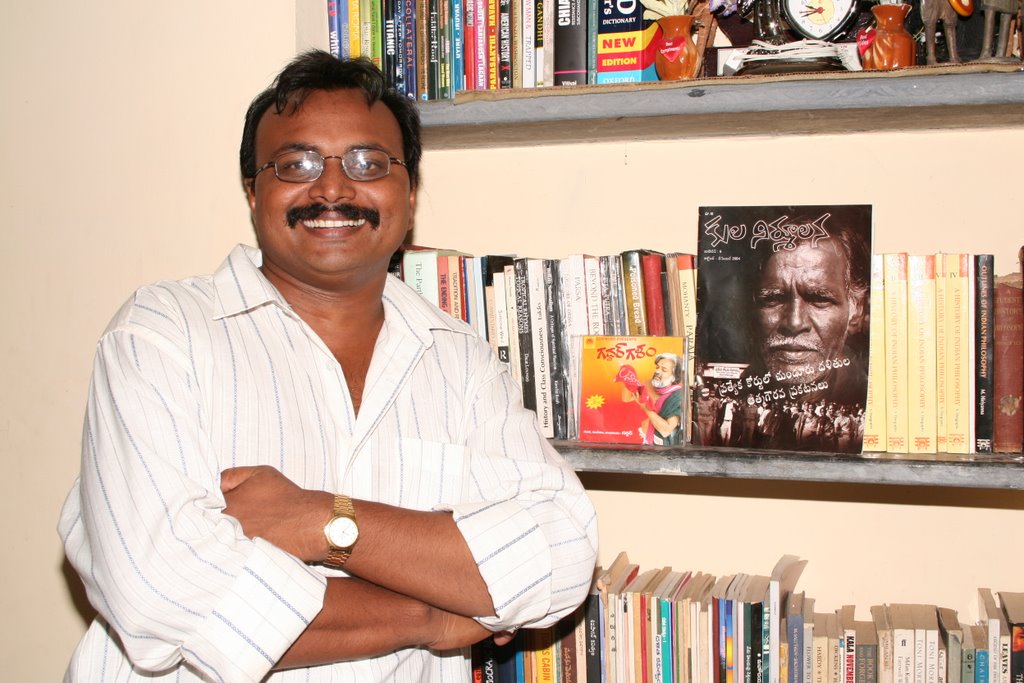
Tsunami: A Challenge to Science and Religion
Dr. P. Kesava Kumar
From 26th December 2004 onwards, the word Tsunami entered into a vocabulary of common people of India. It is reported that more than one and half lakh people are washed away by this and people who survived had lost everything. There was no mark of their thatched houses nearby the shore. Most of them were the people depending on the sea for everyday survival other than the morning walkers on the beach side or the people came to spend their trips at beach resorts. More over it has created a violent mark on the minds of people. It is an experience of nightmare. The word still hunting and even after seeing a small wave fisher folk got frightening. Fisher folk are known for their heroic deeds on sea and especially for their skills in negotiating with sea. Now after this incident suddenly lost the confidence to venture into sea. Some how he picked up the confidence and managed to get fish, there is nobody to buy it. The consumers caught in irrational fear that fish is likely to be contaminated. Altogether livelihood is at stake and lost the direction. They are looking after the people who are coming in their help. Apart from the state and its machinery, now they are surrounded by NGOs, Religious organizations and some political organizations. Here I’m not questioning anybody’s sincerity and commitments for the fellow being. But at the same time every group has their own agenda and like take advantage out of the crisis ridden situation of people at shore. For NGOs they got the cause to serve the people and got a chance to get funds from donor agencies. We are hearing the news that the competition of all the religious organization to establish their base among the victims of Tsunami. The RSS, ISCON, Seva Bharathi, Ramakrishna Mission, Buddhists and Christian Missionaries are actively involving in this philanthropic work. There are media reports of conflicts among these religious groups in a way coming close to these people. One may accuse me for criticizing this phenomenon rather than helping the people who are in need. I have my own ideas and concerns for people and not momentary. I would like to see this Tsunami and after effects from the peoples point of view in keeping in mind long term solutions which can promise the better livelihood and dignified life .
One may wonder to ask is this natural calamity called Tsunami is a challenge to science and religion. In one sense I would like to affirm that, yes, it is. Here I’m not particular about any one religion, but the concept of religion as a whole. This includes every religion. You are all aware that Science came in opposition to the very conception of religion. Science got prominence with the enlightenment and its influence on society in understanding it naturalistic way. Science came as a modern enterprise stand opposite to the traditional life supported by religion. The modernity sought to demolish and replace established forms of knowledge dependent on religious authority such as the theory of creation of the world. This new forms of scientific knowledge depended exclusively on experience, experiment and reason. Historically until 18th century religion has a hold over human life in many aspects. The knowledge about the creation of the world, man’s place in the world, his duties and destiny was dominated and determined by the religion. Knowledge is continually referred to scriptural sources and transmitted through schools, colleges, institutions of religion. Science made an attempt to emancipate man from the ties of superstition and ignorance. Science had conscious efforts to reveals the mysteries of nature. It had a serious blow on the feudal social relationships which is hand in glove with religion. Scientific approach helped in understanding of social phenomenon on the basis of human experience. It played a role in improving human life. However, both religion and science had a tremendous impact on human society. Both of them provided a form of knowledge to understand man and the world in a distinctive manner. Some body may point out knowledge can not distinguished as religious or scientific. This may be true partially. Our knowledge came out of social necessity. Man struggled with nature for his survival. Out of his struggles knowledge got evolved. He worked out to get control over nature. He made an every effort to explain the natural phenomenon. Where he failed to explain he surrendered to the natural forces. There religion got importance, it came to rescue him. It consoled him when he was weak. It gave him security in times of uncertainty. It gave a hope when man feels life is miserable and man had a fear of death. In early stage one can not distinguish science and religion. Now we are using these terms in sense of different world view. At present in our commonsensical understanding we are using it with different connotations.
Then, one may ask how come you treat both of the terms in a same plane. Let me clear my position. When I’m saying Tsunami a challenge to science, I’m not belittling or questioning the credentials of science. I’m pointing only the process of production of scientific knowledge. How scientific knowledge is produced at the contemporary times. Further whose benefits it is carried out. I’m only questioning the existing relationship between scientific enterprises, state and society. My intention is that our science and technology should be people centric.
The day after Christmas, we have seen this tragic happening. This tsunami killed the people of all religions-Hinudus of India, Christians of Nagapattinam, Buddists of Srilanka, Muslims of Indonesia and a people of no religion. I’m not generalizing, but it happened to be mostly poor people whose livelihood based on the sea were killed. The people of well constructed houses nearby sea and people away from the sea were managed to escape from this to certain extent. After happenings of Tusnami not only the people living at shore and others are also terrified. They become insecure. Some where the question striking in their mind, what our God is doing? What sin we did to punish like this? The lady running away from the sea has scolding the sea and God. What all our gods doing? We totally believed and developed blind faith and prayed, submitted ourselves and kneeled in front of gods. We even never suspected his existence. The conscious youth are asking, what our government is doing? Can’t they predict earlier. In IIT Chennai the students feel guilty for not providing people centred technology and put a poster on the institute notice boards. Nowadays for every government information technology is a buzz word. What information has passed for the people at risk. The statement that we are lining in the world of information age has to be checked. Tsunami touched coast of Indian Ocean ranging from Indonesia to Somalia via Srilanka, but media not in a position to capture the images lively. The video images of amateur Thailand photographer is only proof and played time and again in our channels. Media is running along with the political functionaries, its priorities are quite different.
Religion had clever enough in accommodating contrary arguments and finds escape routes. The concept of God is central to religion. God is created this world. God is identified as omnipotent, and omniscience. He is benevolent, all kind and had the qualities of all good of our world. He is the moral Governor. He is ultimate authority in all our human affairs. He should not be questioned. Everything is determined by him.
The first objection is that if God is so kind and all good, why he has committed this act to kill this poor innocent people who struggling to live on sea. Then there is a doubt God lost control over nature. Believers of religion won’t accept nature and men are not in his control, in fact they used to say that he had created this world and everything happening only on his will. Then it can be understood as the god is so cruel and merciless. Nobody is ready to accept. The reply for this is, God knows everything. This is the God’s plan since the world is so corrupted and God taught to teach a lesson to his people. The other form of this argument is it is just fate and depends on one’s karma. Why the corruption of world is attributing only to these people. What karma has done the innocent children who died in this Tsunami. There is just contrary argument is that it doesn’t like to brand these people as corrupt and holds the argument that God decide to take these people into his world of heaven from this corrupt and miserable world. This argument stretched further, those people who killed will definitely get the moksa or liberation which is highest ideal of life, the ultimate purushartha. The religious organizations and its believers are praying for this.
We are listening many stories both in media and oral traditions in further strengthening blind religious beliefs. No body in a position to gave up their subjective positions, their beliefs, and prejudices. Religious beliefs rather down playing their arguments they are sharpened their arguments and try to keep the status quo position. Religion had a double edged sword; the believers use it either way. In this religious garb it won’t allow you to question any thing relating to God and religion. Other than providing the above standard religious arguments, it won’t allow even to think about any naturalistic explanation. Why is it happen? What are the scientific reasons for Tsunami. Rather asking the questions about very conception of religion and god, it may circulate stories of great human concern that people of all communities without any distinction taken shelter at mosque, church, and temple-religion in the name of concern. Further it takes advantage in exploiting the crisis times. Many religion organizations came forward to adopt the villages. One can see overplay of religious symbols and big banners in their names. Media is value neutral, it also play a role of sharing or strengthening dominant religious notions. One can understand that religion can provide hope in helpless situation. This doesn’t stand for the test of rationality.
Tsunami is not such mysterious phenomenon that first time happened. History reveals that many times it happened prior to this 26th December 2005.Why our governments are not taken note of it? At first, Tsunami is not beyond the scientific apprehension. One may predict earlier. Secondly, the volcanic eruption to reach the shore it takes certain time. In this mean time the consequence of the dangerous wave may informed to people on shore and government can make alert. Is our sea untouched by the research? This is not true. There are many efforts from MNCs to exploit the resources of the sea. There are studies and research carried in that direction. The big question is why there is no serious research in relating to Tsunami. Why we are not produced need based and people centric technology.
I would like to argue that scientific knowledge and technological innovations could not develop on its own. Though they develop from social necessities, it needs proper encouragement from the state. The priorities of the state always matters in scientific enterprise. The state is concentrated more on Defense technology and spending more in persuasion of such scientific innovations and technology. Most of our budget allocation is done for this purpose. It doesn’t have any concern for the people centred technology and the needs of the people. The other reason might be people affected by the natural calamities like Tsunami is mostly belonging to poor. The state doesn’t have serious concern for these people. They are much worried about the nuclear reactors at Kalpakkam and nuclear bombs and missiles. The unaccountable money is spending in this venture in the name of nation’s threat and security. The ultimate decision makers in the development of science are not scientists but the state. In other words, the politicians occupied the office of state. State intervenes in the production of knowledge systems. And our knowledge and the fruits of science are not reached the people. Still it maintained as a secret. Science has to taken to popular level. One should not forget that without any warning from the state or advantage of technology, lakhs of people saved on their own from Tsunami just by common sense. At least our science should take note of common sense and it should reach at common sensical experience of the people.
On the other hand the people affected by the Tsunami are not much interested in clothes, food packet , some provisions of immediate needs but they are very much worrying about their future. Any way government is not in a position to create an alternative employment to this fishing folk. They require confidence to lead their life at shore. They have love and hate relations with sea. They have to be educated about these kinds of natural calamities like Tsunami rather preaching religious conformativism. It is not the fate or decision of the God, it can be explained. State has to take such responsibility in enlightening people and in inculcating scientific spirit. Technology has to be developed that can give confidence in people and in understanding the relationship of man with nature.
The people living at shore are not at the mercy of the state. This is their right to get the livelihood and to lead a dignified life since fisherfolk contributing to our economy. Because of imposition of religious ideas and lack of scientific education again people are forced live in chaotic and miserable life. The conflicts among the victims of different castes (Dalits and fishermen) are due to this religious conservatism. The situation demands the dignified life, it is possible only through the politicization of the victims of Tsunami .The community centred science is helpful to realize this rather existing ideologies of religious faith and ‘unconcerned scientific knowledge’.
In case the state is not much concerned about poor fisherfolk, at least it has to show its concern to raise the economy through tourism by attracting the tourists. To have a safe and secure life for tourists at beach resorts, state has to take care of tsunami. Even to protect our Defence technology and Nuclear reactors,( which are happened to be located at nearby sea shore), state has to consider seriously to encourage science and technology to protect from natural calamities like Tsunami.
Subscribe to:
Posts (Atom)
